This week I started taking Asher to skating lessons. He did well…and by well I mean at one point he was flopping around on the ice like a fish out of water. But he did stand and skate on his own having a great time.
As I was waiting for him to come off, I heard a parent immediately share with their child how they can improve, what they need to do better, and how they can try harder. They were kind and quiet but still affirming all the work to be done.
Asher came off and immediately said – loudly and proudly – “Daddy I great at skating. I great skater”
Now objectively this is utterly false unless great skating means lying on the ice for 5 minutes. But I realized I had a chance to affirm the good in him or his lack. He was skating on his own which was new, learning to stand up from falling on his own, and he was trying hard (hence the tired lying on the ice). Was he gliding around the ice doing pirouettes…no of course not.
So the point though is this: so often we have chances and choices to affirm the good in people or their lack. We can affirm how they are growing, doing well, or where they are lacking. And I think we often choose to affirm the growth areas rather than the good already present. And I think that affirming the good in people is a little difference, that can make a huge difference.
And this is actually what God does so often as well.
He affirms the good in us rather than our lack: you are holy (Colossians 1:22), you have a new nature (Colossians 2:10), you are God’s masterpiece (Ephesians 2:10). And if God does that, I just think we should too. We should affirm the good we see in others. We should celebrate the imperfect steps people are taking towards good goals. We should be people who affirm the good rather than the lack.
So of course I said to Asher, “You did Great Asher – you’re a great skater”
Hey everyone – somehow this post and podcast was stuck in “draft” form for quite a while. So its from a couple of weeks ago. But if you missed it here is what happened!
Lent: Seven Woes of Jesus ~ Week 6: Prophet Killers, and Rejecting the Truth
On Sunday we continued in our series looking at how Jesus calls the religious elite of his day to follow God his way. And that’s a message we still need.
So on Sunday we looked at his last “woe” where Jesus essentially condemns the religious leaders as being like their ancestors – people who killed the prophets.
Now the prophets in the Old Testament weren’t so much future tellers, as “forth-tellers” ~ telling the truth to people in power. And this is what got them killed, and it will still get you killed today. The prophets stood up to the kings and powerful and called them out for trusting in military power (horses and chariots), for neglecting the poor, and treating the immigrant and foreigner wrongly. The prophets essentially took the reality of their lives and brought it before the powerful and said, “you are obligated to address this” and if you don’t God’s judgment will come upon you.
And Jesus standing in that tradition comes to the Pharisees and does the same thing. He says that by rejecting him and his message of Good News for the poor and hurting, they are rejecting God and being like those who killed the prophets of old. Jesus says that if they continue to reject the poor, forget about mercy, and neglect justice that judgement and even hell itself will be their destiny.
But here is the interesting part – this isn’t what Jesus wants. Jesus in the passage makes it very clear that what he really wants is to gather them together, like a mother hen, to care and protect. But because the Pharisees reject him, and the truth he brings – they also reject his protection. That when we reject Jesus, we are left all alone with the consequences of our sin. And that’s what happens to the Pharisees – they reject Jesus and suffer the consequences of their own sin.
But here is the hopeful part – we don’t need to make the same choice. We can learn from the example of the Pharisees how hard it is to listen to truth from God, how hard it is to value justice, how hard it is to practice love for the lowly, but how absolutely necessary it is.
So on Sunday we ended with this main point: The Pharisees missed the point, but we can listen and hear Jesus.
Jesus didn’t want destruction, difficulty, and judgement to come upon the Pharisees, but it did because of their rejection of him. Because whenever you miss God’s voice difficulty is on the horizon. But whenever you listen hope is on the horizon
So we ended with a challenge: to listen to Jesus. To actually sit and be open to Jesus, and invite him to speak at least daily into our lives. To let him shape us, and bring up some of the areas we need to change. The truth is hard to hear, but if we want to be gathered together, live like Jesus, and experience his care and comfort we cannot reject him and his way of life. And that begins with hearing and listening.
So on Sunday we had one challenge: To once a day for just 5 minutes a day sit, be open to Jesus, and invite Jesus to speak
Because we each have a choice. A choice to listen and to respond, or not. And that choice can make all the difference.
Sermon Notes:
Big Idea: The Pharisees missed the point, but we have a choice, we don’t have to.
Teaching Points:
Prophets told the truth
Your present reality is dictating your future
Jesus isn’t angry with how they relate to God, but to those around them
God isn’t impressed with religion, and he still isn’t if you ignore the people he sends to direct you and the people you are to care for
When we reject Jesus we are left with the consequences of our sin on our own
the heart of Jesus is still grace
Whenever you miss God’s voice difficulty is on the horizon but whenever you listen hope is on the horizon
The first step to hearing Jesus is opening yourself to Jesus
Invite Jesus to speak to us and change us
Adult Discussion Questions:
What stuck out to you from the sermon? What was challenging to you? What was new? Why do you think that hearing the truth is so hard? What “rises up” or reaction do you have to when someone tries to share with you “the truth”? How have you maybe ignored Jesus in the past like the Pharisees? How can you ensure that you don’t miss or ignore Jesus now?
Challenge for the Week: To once a day for just 5 minutes a day sit, be open to Jesus, and invite Jesus to speak
Here is one sentence worth thinking about, pausing, and then creating some space for some friends:
Rushed relationships are rarely real relationships. Sarah Bessey
Rather than me talking about that, why don’t you call someone or plan to get together with someone who matters to you. Give yourself some time to actually be friends.
On Sunday we continued in our series realizing one key truth from Jesus’ encounter with the Pharisees:
You can be good, you can be moral, you can even be religious and still miss the point
Our morality, and our religiosity is no guarantee that we are actually following the will of God. And this sounds controversial and challenging because it is. The Pharisees were moral, upstanding citizens, incredibly faithful and religious and missed the point. So we then as Christians need to take a hard look at our lives to ensure that we aren’t missing the point.
And we did that on Sunday through looking at one of the “woes” of Jesus. Jesus says this in Matthew 23, “What sorrow awaits you teachers of religious law and you Pharisees. Hypocrites! For you are like whitewashed tombs—beautiful on the outside but filled on the inside with dead people’s bones and all sorts of impurity. Outwardly you look like righteous people, but inwardly your hearts are filled with hypocrisy and lawlessness.”
And while there is lots of contextual stuff going on here, here is the main point Jesus is making. Jesus is saying, you look good on the outside (like a tomb painted white) with all your good actions, but inside you are filled with death, decay, and disease. Jesus hits the Pharisees hard saying that while their outward actions are holy and good, their inner hearts are filled with impurity, hypocrisy, and lawlessness. That they may look good on the outside but inside it’s dark and diseases filled.
So rather than unpacking this theology more, I unpacked the reality of this more. I shared stories of how in my own life recently I’ve taken the right action, with the wrong heart. And how easy it is to be good, religious, and moral but miss the point. How right actions are not a guarantee of a pure heart.
And so we came to this point. We are all broken and need to acknowledge the places, areas, and parts of our hearts where we need Jesus. We cannot ever pretend we have it all so together that we don’t need Jesus. We need him, but we can use our religious activity as excuse to not allow him to challenge us, convict us, and shape us. So on Sunday we landed on this main point: we all need heart surgery. We all need Jesus to come in and cleanse our hearts, to convict us of our lack and brokenness and change us. The one thing we cannot do as Christians is to pretend we are so put together that we are no longer in need of Jesus and his cleansing.
So we closed on Sunday with a simple challenge. To sit and take a courageous moral inventory of the things that God might want to change in our lives. To sit and listen to the Spirit and what he might call out in us. Because while we might be moral and religious it’s no guarantee we aren’t missing the point. And the true point is that if we want to live like Jesus, we had better learn to listen to Jesus.
Sermon Notes:
Big Idea: We all have junk within
Teaching Points:
You can be good, you can be moral, you can even be religious and still miss the point
Whitewashing was a signal that there was death within
People who look like they have it together, but deny their need of a saviour, denying that anything needs to change
It is so easy to hide behind religious actions.
We all need heart surgery
Adult Discussion Questions:
What stuck out to you from the sermon? What was challenging to you? What was new? When have you done the right thing, but inside things were off? Why do you think we can do the right things, but still miss the point? Are you willing to do a courageous moral inventory? Who can help you to ensure not only that it happens, but that changes happen.
Discussion Questions for Families:
Today do something tough – model what you want to see in your family. Sit down and share with your kids or family some of the ways that you have failed with them. Maybe times when your heart wasn’t right. And then talk to them about how it’s important that we be honest with ourselves and with God about where we failed, and that’s how God changes us. Model what you want to see – honesty, and courageously owning your own stuff.
Challenge for the Week: Take a courageous moral inventory
Yes I know the title of an incredibly popular TV show, but really, Jesus should have the credit for this title. Because as far as I know he is the first person to actually talk about people being literally places of walking death.
Jesus actually goes to the Pharisees and calls them whitewashed tombs. Quite literally calling them places of walking death, disease, and decay. And that is quite similar to the AMC show, implying that they are spreading their contamination around. And while there are lots of contextual things that Jesus is saying, here is the point we are going to unpack on Sunday.
You can be good, you can be moral, you can even be religious and still miss the point.
Because the Pharisees are good, moral, and super religious and Jesus says that they still miss the point. That while their actions look good, inwardly their hearts are full of death, disease, and decay.
So we are going to unpack all that on Sunday but here is why this matters for you if you are a follower of Jesus – we can be just like the Pharisees. We can be moral, good, and religious and we can still miss the point. We can still end opposed to God and his kingdom. And if we are Christians that’s the exact opposite of what we want. So on Sunday we’ll look at how to ensure our hearts and our actions are pointed in the right way.
The other day I was feeling very overwhelmed, tired, and just didn’t have much to give. Unfortunately rather than owning that, when my kids – were well kids – and did something wrong I got really mad. Like no reason to be that mad. And I couldn’t shake it.
The truth was I was already mad before they did anything, their little lapses just gave me a reason to let it out. The sad part is that sometimes we don’t get angry with the people who cause us hurt, just the ones who are easier to take it out on (our kids, spouse, etc).
But my kids did something amazing, because I think they are occasionally better people than I am.
My guess was that they hadn’t seen me that mad probably much. Because Hudson gave me a hug, got changed, and went upstairs and went to bed on his own and just waited for me to turn off the lights. This has never ever happened before. Asher also went upstairs, brushed his teeth, and while I was putting Eden to bed came in and said this to me, “Dad this a happy house, you not be mad. You be happy, I happy too, we happy family.”
Sometimes with a simple little phrase you realize how much you blew it, and also how much you have to learn and grow.
But here is the beautiful part of parenting even when you blow it; you get to keep trying, learning, and growing. You get to take moments like that where you blew it and ask for forgiveness, and be thankful for your family. Because parenting is not a sprint, but a journey – and sometimes it’s your kids who actually point you in the right direction.
So on Sunday we continued our series of Lent looking at the seven woes. And the “woe” we unpacked was this one from Jesus:
What sorrow awaits you teachers of religious law and you Pharisees. Hypocrites! For you are so careful to clean the outside of the cup and the dish, but inside you are filthy—full of greed and self-indulgence! You blind Pharisee! First wash the inside of the cup and the dish and then the outside will become clean too.
And here Jesus enters into a debate on the cleaning of cups. And there are lots of cultural things going on here that we unpacked on Sunday but the main point of Jesus really is this: having stuff clean on the outside (our actions, our religious rituals, our following the rules) doesn’t matter if inside we aren’t clean (our hearts, desires, and wants).
Jesus is trying to point out something that is obvious to anyone – you can do the right thing with the wrong motives and it misses the point. That your kids can clean their room not because you want them to, but because they want to to go to a party. Your employee can go above and beyond, not because they care, but because they want the weekend off. Your spouse can be all thoughtful and caring, for you to only realize they got in a fender bender. The point is that the right actions without the right heart is deadly. That what good is it if you do the right thing – but your heart and motives are off? What good is it if you follow all the rules of the Bible – but inside you are seething with greed, excess, and sinful desires? What good is the outside of a cup looking clean, if the inside is full of junk?
Jesus’ desire to move our focus from the outward to the inward and where the work needs to be done. Because here is the truth: all of our hearts are dirty and filled with junk. Everyone has some brokenness, some greed, some hurt, some pride, some agenda, some mixed motives and desires that need to be changed.
And the truth though is that following the rules doesn’t change our hearts. I know this because my kids sometimes follow the rules, but they aren’t doing them happily and their hearts remain unchanged. For our hearts to be changed we need an encounter, and an experiences specifically with Jesus and the Holy Spirit.
So on Sunday we unpacked this main idea: that we all need a heart change, a heart transformation, and a heart cleansing.
And so to do this we took communion and took time to connect with Jesus. We took time and created space to ask for a heart cleansing, because that is what we all need. We all need some transformation from hurt to healing, from grime to grace, from hate to hope. And the way this happens isn’t by doubling down on following the rules, but doubling down on an encounter with Jesus. And that’s our challenge for the week: to have an encounter with Jesus that changes us. Because that’s where the magic is of following Jesus, not out of duty and legalism, but out of freedom with a new and changed heart.
Sermon Notes:
Big Idea: We all need a heart change, a heart transformation, and a heart cleansing
Teaching Points:
“I think what Jesus is warning us about is that it’s entirely possible to be a religious, dedicated Christian, and yet totally miss the life-giving nature of a life centered squarely on his teachings. Some of us have exchanged Jesus for a Christian religion.” Benjamin Corey
The inner life is what matters.
Following the rules and the law doesn’t matter unless your heart is changed.
A heart change matters more than following the rules.
What God wants aren’t people who just follow the rules, God wants people who have hearts like his.
Following the rules doesn’t change your heart.
Adult Discussion Questions:
What stuck out to you from the sermon? What was challenging to you? What was new? Have you ever had an experience of someone “following the rules” for the wrong motives? How did it make you feel? Why don’t you think following the rules changes our hearts? How can Jesus change our hearts? How can we ensure that they stay changed?
Discussion Questions for Families:
Use the example I gave from Hudson, or maybe one from your own life to talk about motives. Talk about how we as parents love when our kids do the right thing, but more than that want to see the right heart. Ask them what the difference might be in simple and easy thing like dishes, like cleaning up toys, etc.
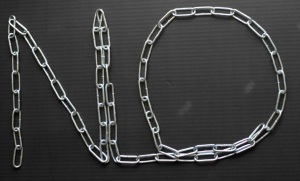
I’m not great at leadership, but I would say that my leadership is growing. And one of the things that has helped me to grow the most are two concepts: margin, and saying no. And both of these are intertwined.
The truth is that many of us live without margin. And this lack of margin can appear in our finances, in our work time, in our family life time, and relationships. So often we are just so busy and so full we live at full-speed all the time without breaks, Sabbath, or rest.
The true thing at least for me is this: my best decisions don’t happen in stress, and busyness can overwhelm importance.
What I mean by this is sometimes we have so little margin that we just need to get things done, that then we don’t have time or space for the non-urgent but really important things of our lives. I also know stress doesn’t bring out my best, and decisions made in a hurry or without space are never going to be my best decisions.
So what I’m been learning is the importance of keeping margin in my life and in my week. Here are some the practical things I do:
I try to plan my week only 80% full. This practice has been incredibly helpful. First, it allows me to have space to say yes to the things that may spontaneously happen, or crisis that need to be mananged withtout pushing me “into stress”. Secondly, if the week doesn’t fill up I have 20% of my time to now dedicate to non-urgent but important tasks (like leadership, visioning, or strategic planning). It allows me to move past the day to day to larger items.
I have one weekend a month off. What this means for me is that each month I have one weekend where we don’t go out, don’t plan anything, and it’s free. As an introvert I need this. Our lives can become so jammed packed with all sorts of things, that I don’t have the downtime I need. By planning out and booking out one weekend a month where we don’t have any engagements it gives me breathing space.
I limit my nights out. What I realized early on in my life ministry is that if I got busy, I just added another night out. And soon that became a habit where I was out more than I was at home. The trouble is that messes up not only my work/life balance, makes my family a lack of priority, but then became expected by those I met with. Almost every issue then became urgent that could be met within a couple of days. In the end the lack of margin wasn’t helpful.
But those are just a few examples, but I mention this because my bet is you need this too. My bet is that you function best with some margin, some breathing room, some space in your life. The trouble is that if we aren’t intentional it doesn’t happen. Events, work, and other pressures will crowd out our space and in the end we aren’t living, just surviving.
So here comes the second thing: learning to say no. I say yes (even now) probably to too many things. To nice things, to good things, but to non-necessary things. And you can define “non-necessary” however you want but my guess is you might know what I’m talking about. Saying yes to that event, that outing, that pressure that isn’t really helping.
What I’ve learned is that to keep margin, to keep healthy, to keep leading well – I need to say no to more things than I say yes to. I need to make sure that I’m saying yes to the best and no, to the good, because rarely do semi-good leaders say yes to the bad. But our schedules and our lives get filled with okay, good, or not bad things that crowd out our space to do the best things.
So all of this is to say one thing: my bet is your life would be better with more margin, and that starts by maybe saying no to some things.
So why not take some time and think that through. How can you structure some space or margin in your life (i.e. plan a week 80% full, or a weekend off, or night off once a week etc)? What do you know you should say no to that you haven’t? How can you free yourself to give yourself to the best things around you?
I think part of the goal of leadership is also to last, and to not burn out. So these are two practices that are helping with that: margin and saying no.
On Sunday we looked at the fourth woe of Jesus. And in the fourth woe Jesus says this,
What sorrow awaits you teachers of religious law and you Pharisees. Hypocrites! For you are careful to tithe even the tiniest income from your herb gardens, but you ignore the more important aspects of the law—justice, mercy, and faith. You should tithe, yes, but do not neglect the more important things. Blind guides! You strain your water so you won’t accidentally swallow a gnat, but you swallow a camel.
And here Jesus is confronting the religious leaders of his day for not living like God and for not prioritizing or orientating their lives in the way of God. The way they are living isn’t bringing them closer to God, or God closer to the world.
The truth is that if our religious energies go into the “minor” things rather than the “major” things of following God we can become an obstacle to God. And that is actually what Jesus is arguing that they are missing the more major, weightier, and important commandments. Apparently Jesus thinks some laws and commands matter more than others, and he’s right of course.
Jesus pulls an allusion to Micah saying what does God require mercy, justice, and faith. He says essentially what good is tithing your herb garden when you forget about the major things? What good is following the minor rules if you don’t get the major ones right?
And this is a really convicting and challenging teaching because here Jesus wants to change the metric of our holiness. Holiness isn’t about just following the rules, but which ones you actually prioritize and put the most effort into. Following Jesus is about the greatest commandments, mercy, faith, and justice.
So we ended with this main point: Some things matter more than others and we need to orient our lives around those things
The truth is we can be religious and still miss the point like the Pharisees. We need to have our lives orientated around the main things: faith, mercy, and justice like Jesus asks.
So we ended with a simple challenge. To sit and contemplate on this question:
Have I forgotten mercy, justice, or faithfulness?
Because that question matters. It matters to Jesus so it should matter to us.
So that’s what we did on Sunday, but it’s also worth doing right now, because whenever our lives major on the minors we are missing the point.
Sermon Notes:
Big Idea: Some things matter more than others and we need to orient our lives around those things
Teaching Points:
Their way of living will not bring them closer to God, or God closer to the world
Jesus believes some commands matter more than others.
The things we often measure our holiness and righteousness against aren’t always the things God is measuring.
It is so easy to neglect the most important things while keeping other religious things going.
Adult Discussion Questions:
What stuck out to you from the sermon? What was challenging to you? What was new? Have you practiced Lent before? Why or why not? Is there something you could give up this year for Lent? Have you ever considered that you might be “spiritually blind”? Can you think of other examples of “spiritual blindness”? Why is being spiritually blind so very dangerous? Are there any areas you feel you might be blind to?
Challenge for the Week: God reveal the areas of blindness in me.
On Sunday we are going to be looking at something that is controversial, but well Jesus says it so we should believe it – and it’s this:
Some rules matter more than others.
And while that might strike you as odd or even untrue – the trouble is it’s biblical. Biblically speaking while there are lots of important rules, or rhythms we should have as Christians there are some that matter more than others. And that even if you do some of the minor obligations, or regulations but miss the big ones – Jesus isn’t happy.
And while it sounds funny that there is actually a hierarchy of importance in the way of following Jesus it is true. Jesus himself says that there is a “greatest commandment’ which means there are “minor commandments”. And here is the tension: sometimes we value or prioritize the minors over the majors.
So that’s where we are going on Sunday. But here is the question I have for you before we get there: what do you think the majors of faith are? Think about it, pray about it, and then on Sunday let’s see what Jesus has to say about it.

 This week I started taking Asher to skating lessons. He did well…and by well I mean at one point he was flopping around on the ice like a fish out of water. But he did stand and skate on his own having a great time.
 On Sunday we continued in our series realizing one key truth from Jesus’ encounter with the Pharisees:
 The other day I was feeling very overwhelmed, tired, and just didn’t have much to give. Unfortunately rather than owning that, when my kids – were well kids – and did something wrong I got really mad. Like no reason to be that mad. And I couldn’t shake it.
 So on Sunday we continued our series of Lent looking at the seven woes. And the “woe” we unpacked was this one from Jesus:
 I’m not great at leadership, but I would say that my leadership is growing. And one of the things that has helped me to grow the most are two concepts: margin, and saying no. And both of these are intertwined.
 On Sunday we looked at the fourth woe of Jesus. And in the fourth woe Jesus says this,
 On Sunday we are going to be looking at something that is controversial, but well Jesus says it so we should believe it – and it’s this:
 { Andrew Mills }