How Does Jesus Actually Save Us?

Well come Sunday we are going to be talking about one area of theology that has had the most discussion. It’sOLYMPUS DIGITAL CAMERA called Soteriology – the study of salvation. And specifically we are going to be examining what is called “Atonement Theories”. These are explanations for how Jesus’ death and resurrection actually saves us. If the question is “how are we saved” ~ atonement theories try to give us some answers.
Here’s the thing though that is interesting: there is no standard answer.

The early church in the creeds developed lots of theology around Jesus, the Trinity, and lots more. But there is no standard, all encompassing, or definitive statement. What all Christians believe is that it is through Jesus Christ that we are saved. How this actually works is where there is lots of discussion.

So we want to wade into this discussion and go over some of the different alternatives, viewpoints, and theories. The hope through this is that not only will we come to a better understanding of how Jesus saves us, but that we might continue to be saved and transformed by Jesus.

So before we get there why not give this some thought. How does Jesus’ death and resurrection actually save us? And come Sunday I’ll give you my best answer

Why the Trinity and What’s the Trinity?

trinityOn Sunday we are going to be tackling some of the most difficult stuff to understand in Christian theology. We are going to be looking the doctrine of the Trinity.

The Trinity is hard to understand, prone to error, and occasionally makes your mind melt. But in a good way.

So why bother learning it?

Well because at the heart of the trinity is this beautiful compelling and absolutely astounding vision of a dance of love that we want to discover together on Sunday. And even if it is difficult this one belief is probably the most distinctive belief of Christianity that distinguishes it from other monotheistic faiths (i.e. Islam and Judaism).

So we are going to give it a shot at looking at it, and learning about it. St. Augustine once said, “There is no subject where error is more dangerous, research more laborious and discovery more fruitful than the ones of the Trinity of the Father, the Son, and the Holy Spirit” And I think that is very true. So come Sunday we are going to be exploring the Trinity and hopefully discovering something more fruitful than we ever imagined.

Who’s Jesus?

On Sunday we are going to be continuing in our series looking at Theology 101. We are going to be discussing a key, or they 443072_50402965key central tenet of Christianity: Jesus Christ. This is called Christology, and we’ll be exploring the humanity, divinity, and most of all the revelation of Jesus Christ.

The revelation of Jesus is so key to our current culture. Currently there are lots of views floating around our culture about what God is like: a grandfather, non-existent, passé, an angry vengeful warrior, someone intensely interested in personal morality, or lots of things. The God I’m interested is none of these. The God I’m interested in is the one that Christ reveals, that Christ shares, and the one that Jesus says looks like him.

And that’s what we are going to be looking at, but before we get there I have a question for you. As you think about God, and what he’s like, here’s my question – does he look like Jesus? And if he doesn’t maybe there are some changes to be made.

Theology 101 Series

On Sunday we are kicking off a brand new series called Theology 101. We are going to be diving into some topics we kind of usually keep to the edges and might not really address like:

  • What is God really like (doctrine of God)
  • What is Jesus actually like and why is he God and does he have superpowers (doctrine of Christ)
  • What is the Trinity and does it even matter for our lives
  • How does Jesus actually save us – is there like a ledger sheet or something?
  • What will happen at the end of time? Is heaven full of clouds, and hell full of fire?

We are going to be looking at these questions and more. Giving time to thinking them through and asking more questions. So I hope you can join us!

Theology 101

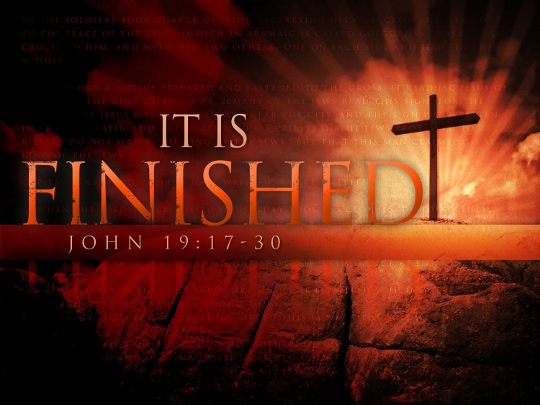
Three Powerful Words: It is Finished

There are three really powerful words when put together. And no it’s not “I love you”, although those are powerful words too.

The three words I’m thinking of are these: “It is finished.”

Those are really wonderful and powerful words to be able to say. Sometimes it feels good  just to say them after remodeling or renovating your house. Sometimes it feels good to say them after a hard day at work, saying “it is finished”.  Sometimes it is really powerful to say them after a huge project, or event.

it-is-finishedBut these words are really more powerful and meaningful when they are shared about soul level stuff.

  • Like when you can finally look back at a brutally dark period of your life and finally say, “It is finished”.
  • When you can look at a hurtful person, and finally because of forgiveness say, “it is finished”.
  • When you can look at some of your addictions (drugs, drinking, pornography, power, importance whatever) and be free from them and say, “It is finished”.

When you can look back on hurtful periods, sinful things, or difficult things and finally say “It is finished”, those are some of the most powerful three words to utter.

And come Sunday we are going to look at how you can say them in your life, over the things that hold you trapped. But first we are going to look at who said those three words first, what they mean, and how they can change your life.

“It is finished” – Jesus (John 19:30)

Where Are You God?

On Sunday we are tackling one of the most difficult texts in the Bible actually. It’s a familiar one so sometimes we don’t push back against it very much. But when you start to think about it – it raises tons of questions.

The text is this, where Jesus cries out, “My God, my God, why have you forsaken me?”

And that’s the question we want to really pursue. Why? Why? Why would the Father abandon his only Son? Why would the Father who is demonstrated and revealed by Jesus to be full of grace and forgiveness – abandon his Son when he needed him the most?

And don’t just give the easy answer of – “well he did this for our sin. “

Years ago when I was a youth pastor, one of my Jr. High’s pointed out, “sometimes the problems’ with the easy answers.” I had just told him that exact answer, and in clarity he raised a new tension for me with this verse.

He said this:

“Well Andrew, when I forgive my sister I don’t have to kill my cat, or abandon my dog. Why does God kill his son, and abandon him. Why doesn’t he just forgive?”

And that gets to the heart of the tension with this text – why God? Why are you doing this? What is going on? WHY?

And we’re in good company raising our voices, shouting, and screaming “why would you do this God”?  Because Jesus does the same thing.

So we are going to try to walk through some of this, examine it, and hope to find some answers. It will be tough, as Martin Luther the great reformer said, “God forsaking God, who can understand it?”

Well on Sunday we are going to give it a shot.

Finding Paradise

screen-shot-2011-04-22-at-9-04-38-amOn Sunday we are looking at the 4th word Jesus says, before he dies, where he says, “I assure you, today you will be with me in paradise”.  Luke 23:43.

This is truly a beautiful statement and promise Jesus gives to a thief that hangs next to him.

What I find interesting is that both thieves mock Jesus. Both thieves seem to disbelieve in Jesus. Both thieves seem to think Jesus is a joke. But then both thieves have the same experience with Jesus. They both hear his words, they both see how he is nailed to the cross, they both see the look on his face as people mock him. And yet one thief continues to hurl abuse at Jesus, where the other has a change of heart.

And this change of heart prompts him to hear, “Today you will be with me in paradise”. On Sunday I want to look at this phrase, and what led the one thief to the place where he could hear that phrase. Because if there is something I think we all need, it’s to be with Jesus. This is the promise the thief receives, because of how his heart changed. So we will look at how that happens, and how it might happen in us as well.

Father Forgive Them For They Know Not What they Are Doing…

On Sunday we are looking at one of the most well-known of all of Jesus’ sayings. And the saying we are looking at is this:

“Father, forgive them; for they do not know what they are doing.” Luke 23:43

And sometimes things that become well-known, also become shallowly known. Since we are familiar with a thought or a saying, we think we deeply understand a thought or a saying. Sometimes the biggest enemy of understanding, is familiarity.

So I want to make this saying a little less – familiar to you. To bring up some questions to intrigue you, and some dissonance to help us to dive deeper.

First question, “who is the “them” in this last request of Jesus? Who is the “them” that should be forgiven?” Because in the Scripture itself the “them” isn’t clear. Is it the Roman guards crucifying him? Is it the rulers and authorities? Or might it even be…us he is forgiving? I think it’s n important question to dive into

Second question, “what does “For they know not what they are doing” mean?” I mean honestly, the Romans knew they were killing someone. They knew they were killing someone probably innocent (look at the interaction with Pilate). It’s not like they didn’t know they were killing someone. They also knew they were killing an emissary of God, or someone who claimed to be the Son of God. That’s the whole reason he is being killed anyway. They knew of the miracles and all that Jesus is stirring up so they kill him. So what does “for they know not what they are doing” actually mean?

Third question, “who is the statement addressed to?” We like to think it’s about us, and how God will forgive us. But that’s just our self-centeredness talking because the prayer is not addressed to us at all. It’s addressed to the Father. So how does that change how we interpret this verse? Well I’ll give you a clue, if it’s not addressed to us, it can’t be primarily about us.

But those are just some of the initial questions I have with this verse I want to pursue on Sunday. Because as familiar as this verse is, I don’t actually think it’s that well understood, and it has a lot to teach us.

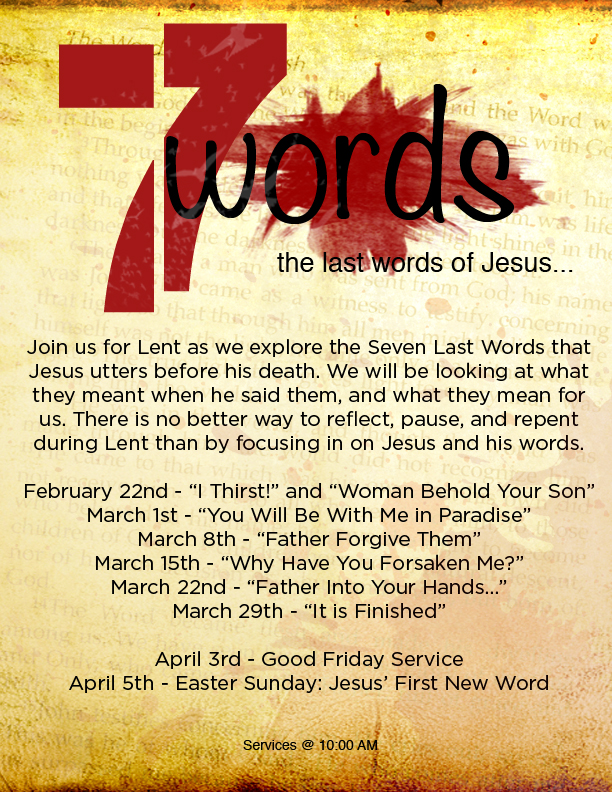
Seven Last Words Of Jesus

On Sunday we are beginning a brand new series focusing on the Seven Last Words of Jesus for Lent.

Lent is an important time to slow down, to reflect, to sacrifice and most of all to focus in on Jesus. So over the next few weeks we will be reflecting on these words.

  • Father, forgive them, for they do not know what they do. (Luke 23:34)
  • Truly, I say to you, today you will be with me in paradise. (Luke 23:43)
  • Woman, behold your son. Son Behold your mother. (John 19:26–27)
  • My God, My God, why have you forsaken me? (Matthew 27:46 & Mark 15:34)
  • I thirst. (John 19:28)
  • It is finished. (John 19:29-30)
  • Father, into your hands I commit my spirit. (Luke 23:46)

And I’d encourage you as we move through Lent to be reading these words and these stories. But as you read and contemplate on the seven last words of Jesus, don’t forget one key thing. That while these are his seven last words prior to his death, he is still speaking now and we should be listening.

7 Letters

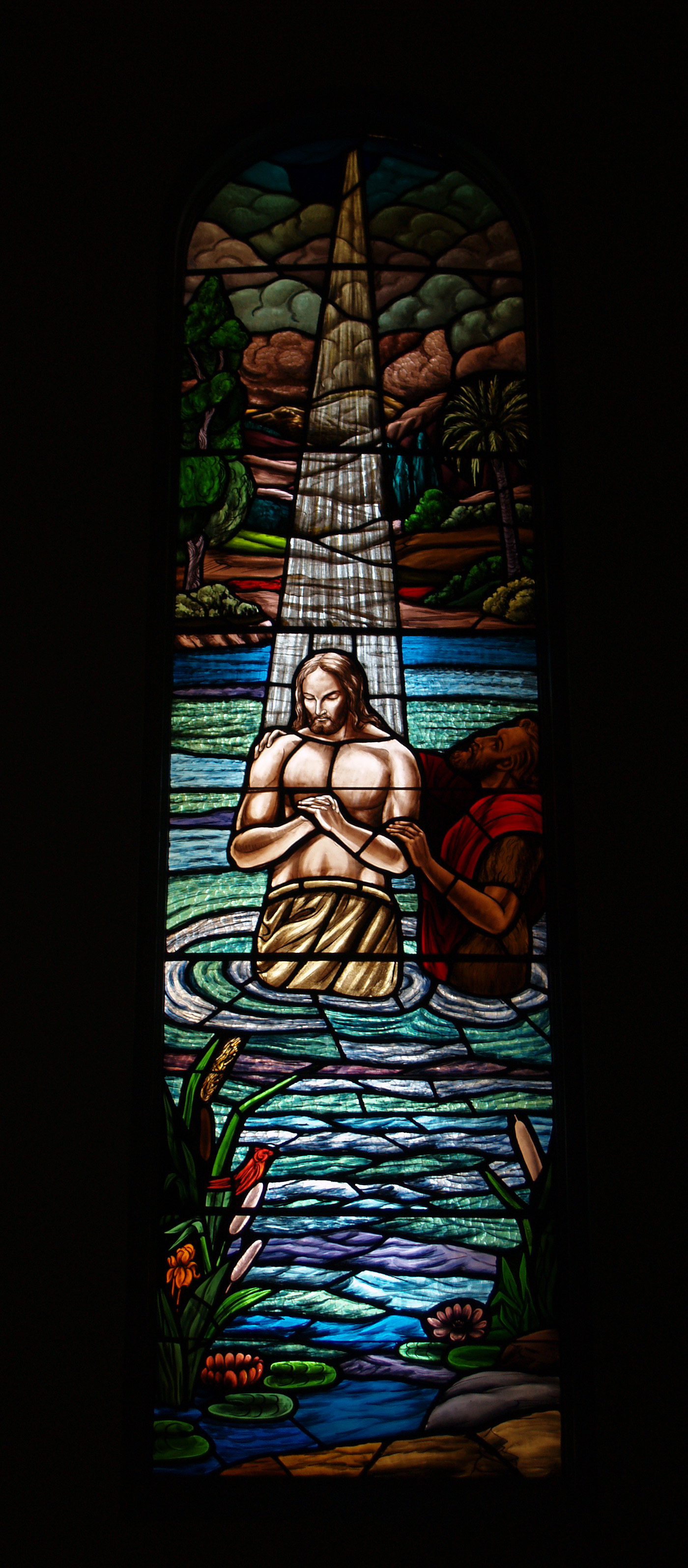
Baptisms and Walking with Others

772301_79279389This Sunday we are having Baptisms to end our series on “Finding a Fresh Start”. Could there be any better way to end talking about finding a fresh start, than seeing baptisms? That’s what they are all about – starting fresh. Saying I want to follow you Jesus, going down into the waters, and coming out confirmed in Christ’s death and resurrection.

It’s a beautiful thing.


But something we will learn this Sunday is this too, it is not an individual thing. Baptisms are a corporate thing, body-thing, community thing.


And while this distinction might seem small it isn’t. It is crucial and important. Because the truth is that while we can find a fresh start on our own, we can’t keep a fresh start going on our own. We need others investing and involved in our lives. Faith is a communal journey, not an individual journey.


So on Sunday as we see people take a next step, and see a fresh start we are also going to be reflecting on this question: “whom are we journeying with”? Because faith is passed on through others, sustained with others, and developed with others. So who are the others in your life?


That’s our question for Sunday, and it’s a good question for today too.