
Why I Still Believe in Church…Even When Its Imperfect

1013561_30930609On Sunday we challenged a pretty close and dear North American myth of Christianity. That all you need is “me and Jesus” to follow him.

This idea that you can follow Jesus without committing to a church, or a community of believers is pretty common. Our culture values autonomy, individualism, and freedom of choice so it’s no surprise its affected religion. The truth though is that you need a community to follow Jesus. Following Jesus isn’t a solo sport, and it’s not healthy Biblically to follow Jesus on your own.

And this is a difficult truth to hear. Richard Rohr once said, “Before the truth sets you free, it makes you miserable.” And this is true.

Because the truth is you need others deeply in your life to follow Jesus well, deeply, and for a lifetime. Faith is passed on in community. Faith is grown in community. And faith is found in community.

So while I know it’s not popular to say: I believe we still need to commit to the church. Yes the imperfect, messy, and occasionally hurtful church. I know it’s not a popular belief, but I believe it is true. God is still using the church, imperfect as she may be.

St. Cyprian once said, “You cannot have God for your Father if You have not the Church for your Mother.” And this is true.

So on Sunday we looked at the last statement in our SevenFold Way of Following Jesus Series.

I am participating in a community of followers of Jesus on mission to the world.

And I believe that we do actually need to commit, participate, and join in God’s mission through the church.

I’m not saying that you need to join our church, or a church that looks, acts, or is structured like ours. But I do believe we need to join a local body of believers to participate in God’s mission to change the world.

You see, Church is not somewhere you go, it’s a people you participate with. Church isn’t a destination you go to, It’s a calling you live. And it needs to be lived out with others.

So we need the church, and the church needs you. And I hope you might be able to agree with this statement for you and your context:

I am participating in a community of followers of Jesus on mission to the world.

Because I think the church and community matters, and I hope you do too.

Community is the deepest and most foundational reality that exist. Leonardo Boff

Teaching Notes

Big Idea: I am participating in a community of followers of Jesus on mission to the world.

Teaching Points:

  • Before the truth sets you free, it tends to make you miserable. Richard Rohr
  • Myth: That you can follow Jesus on your own
  • Following Jesus is not a solo sport
  • You cannot have God for your Father if You have not the Church for your Mother. St. Cyprian
  • Church isn’t a destination you go, It’s a calling you live. And it needs to be lived out with others
  • We need to: Commit, Participate, and Transform the World
  • Church is not somewhere you go, it’s a people you participate with.
  • You are needed
  • God what have you given to me to give to others?
  • This idea that Christianity and consumerism are completely compatible…is the great insanity of our times. Win Butler
  • The church exists to transform lives.

Adult Discussion Questions:

What stuck out to you from the sermon? What was challenging to you? How did God speak to you through it? What was new?

Have you ever had a bad experience with church? Have you ever had a beautiful experience with church? Why or why not do you think being a part of a community of believers matters? How might you more deeply commit, and participate in church? What next steps can you take?

Discussion Question for Families:

Talk to you kids about the importance of community. Ask them who other than you as their parents, are adults that they really respect. Ask them why, and then think about how you might have them invest more in your kids, because raising kids takes a community.

Challenge for the Week: Commit and participate in a church, to transform lives.
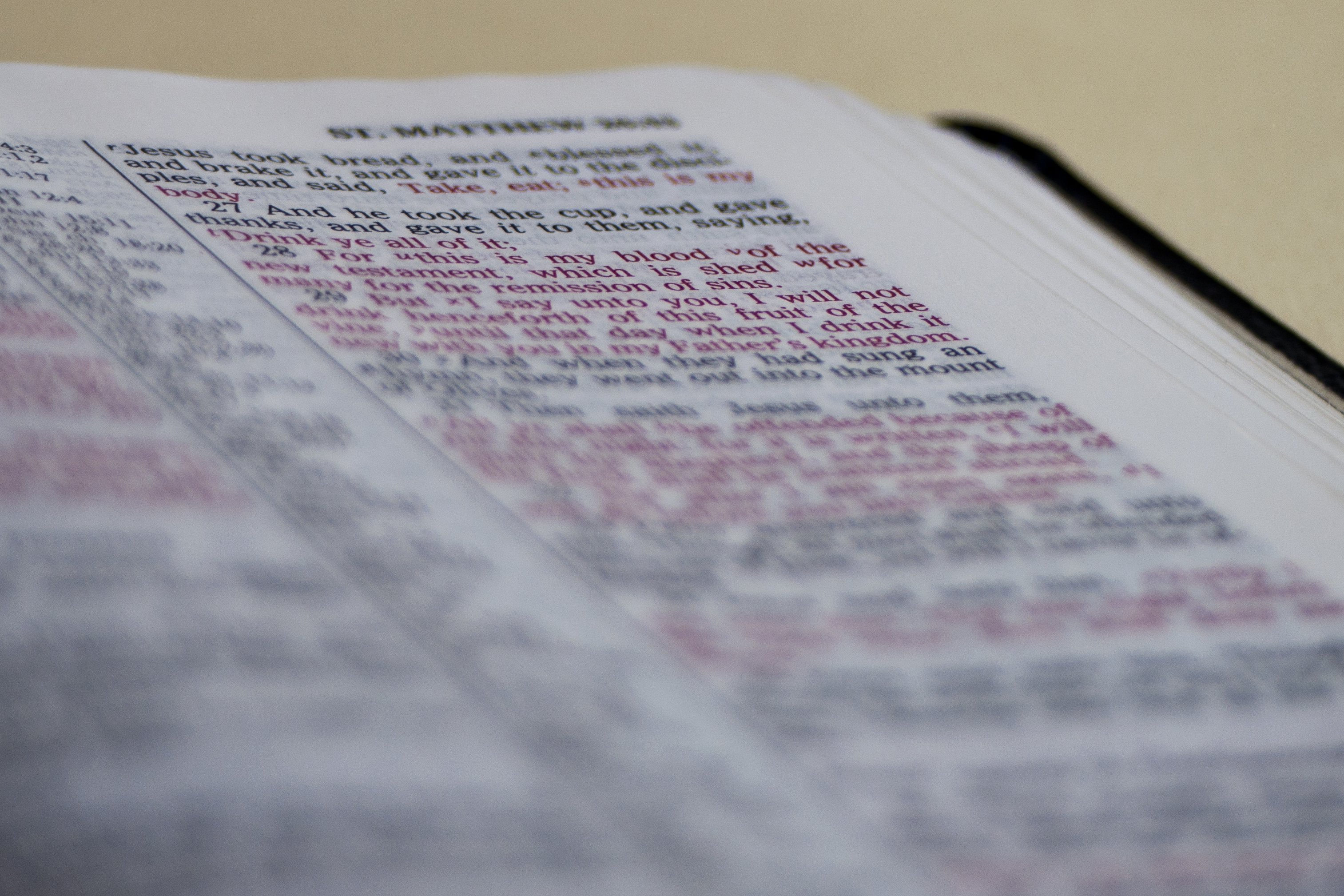
Red Letters of the Bible

1366751_91583540On Sunday we looked at this statement from the “Sevenfold Way of Following Jesus” – I am learning the teachings of Jesus.

This is such an important part of following Jesus. Because how are we to follow Jesus if we don’t know what he taught, or how he lived? Learning the teachings of Jesus are absolutely crucial to follow Jesus well.

We cannot follow Jesus well if we are unsure, confused, or misinformed about what he taught and how he lived.

And I would also add this: that Whenever we, as Jesus followers, have neglected his teachings, disaster has happened. The Crusades, hate, persecution, and most certainly a lack of love.

So I believe we need to focus back in on the teachings of Jesus. Yet this can also be difficult, because while we tell people to read the Bible we don’t often teach them how.

So on Sunday I gave you three simple tips to read the Bible, that helps to find more out of it. The first is to pay attention not for information, but revelation. God is fully revealed in Jesus. So as you read the teachings of Jesus, what does this reveal about God? For example, holiness in Jesus is revealed not as separation, but incarnation. Very different things.

The second hint is to look for things to practice. Jesus himself says: “Whoever hears my words and puts them into practice is like a Wiseman” (Matt 7.24). So watch for things to put into practice that day. Rather than reading a chapter, read till God reveals something you need to practice that day. It shifts the point from information, to practice and it’s a good shift to happen.

And lastly, I shared how we should read, watching for how we can grow in “loving God” and “loving others”. Jesus when he summarizes the teaching of the Old Testament says, it all comes down to loving God and loving others. That’s the point. So when I read I watch for that: how does this help me love others and God better, deeper, and wholer. St. Augustine once wrote:

“So anyone who thinks that he has understood the divine Scriptures or any part of them but cannot by his understanding build up this double love of God and neighbor, has not yet succeeded in understanding them”

And I think that’s true. So I watch for what the text reveals about God, reveals about what I’m to practice, and reveals about how I’m to love God better. This helps me to focus in on it, and to better learn the teachings of Jesus. Because I know that the more I learn the teachings of Jesus the clearer God becomes, and the more my life reflects Jesus. So I gave this challenge: read the gospels everyday this week. That’s a probably good challenge for all of us for a week…or probably for a lifetime.


Sermon Notes:

Big Idea: I am learning the teachings of Jesus

Teaching Points:

  • We do not drift into discipleship.
  • We cannot follow Jesus well if we are unsure, confused, or misinformed about what he taught and how he lived
  • Whenever we, as Jesus followers, have neglected his teachings of disaster has happened
  • Anyone who has seen me has seen the Father. John 14:9
  • Focus not on gaining information but revelation
  • Holiness is not separation from messiness
  • Rather than reading the Bible for information, read it for action
  • How does this help me to love God, or love others better?
  • We need to learn the teachings of Jesus
  • If we want to keep our identity, if we want a text to live by that keeps us in the company of God’s people, keeps us conversant with who he is and the way he works, we simply must eat this book…The blunt reality is that for all our sophistication, learning, and self-study we don’t know enough to run our lives. Eugene Peterson

Adult Discussion Questions:

What stuck out to you from the sermon? What was challenging to you? How did God speak to you through it? What was new? What have been some of your struggles with reading the Bible? How might looking for things to practice help you in learning the teachings of Jesus? Why would you say learning the teachings of Jesus is important? Which teachings of Jesus stand out to you most?

Discussion Question for Families:

This week rather than asking questions, tell stories. Find a story of Jesus to tell each day and do that as a family, and let them ask questions and discover who Jesus is.

Challenge for the Week: This week everyday read some of the teachings of Jesus

OrthoKardia the Missing Link: Or Why Christians Don’t Look Like Christ

cross_jesus_wood_216556On Sunday we looked at this statement from the EMCC’s “Seven-Fold Way of Following Jesus”. And it says, “I am learning to be like Jesus in terms of my attitudes, behaviors, and character”. And this is really key because the world doesn’t need more information about Jesus, it needs more people living like Jesus. But here is the snag in our modern Western world; we think that the key to people living more like Jesus is learning more about Jesus. But knowledge does not translate directly into action. There is a missing step. And we know this (Just think about whether you flossed, exercised, or walked to work today. We all know this is a good thing to do, we just don’t do it).

So we looked at three terms on Sunday. Orthdoxy – which means right beliefs (or knowledge). Orthopraxy – which menas right actions. And lastly, the missing link between the two – Orthokardia – which means right-heartedness.

The point is that right actions flow out of a right heart not just the right knowledge. And this is something that Jesus actually teaches in Mark 7; that evil things flow out of an evil heart. And good things flow out of a transformed heart. This is why the heart is such a key image in the Bible. This is why all the Old Testament promises in Jeremiah 31:31-34 and Ezekiel 36:25-27 talk about God giving us a new heart, so that we can live differently.

The point is that if we want to live like Jesus, we need a heart like Jesus. A heart transformed to have the desires he does, to have the inclinations, and longing that he does. And this is exactly what we get when we decide to follow Jesus. We get a new heart, or as Paul puts, we are a new creation. We are made new and different so that we can live in a new and different way. When we decide to follow Jesus, our old selfish heart is gone, so that we might follow Jesus in a new way.

And that’s what we looked at on Sunday, because, before we will ever live differently, we need to know that we are different. And we are different if we have decided to follow Jesus. So we can actually learn to live like Jesus in terms of our attitudes, behaviours, and character.

And we landed and focused on one simple next step to learn to live more like Jesus. It sounds silly and trite but it isn’t. The next step is simple: pray to Jesus. Pray to Jesus asking him to help you live more like him. Pray to Jesus asking him to reveal areas to live more like him. Pray to Jesus asking him to empower us to live more like him.

The point is that when we pray, we focus our hearts, minds, and souls on Jesus Christ. And when our hearts are focused on Jesus, then they can direct us to live like Jesus. We cannot learn to be like Jesus on our own, we need his help and the Holy Spirit. So praying isn’t a simplistic answer, it is the answer. Without prayer we won’t be able to learn to live like Jesus. But with prayer we can not only learn to know how to act, but also be empowered to act through Jesus.

So we ended with one simple challenge. To pray this week to learn to live more like Jesus in terms of our attitudes, behaviors, and character. And to ask Jesus to reveal one attitude, one behavior, and one character piece to start to work on, practice, and learn.

And my honest belief is that as we ask Jesus to lead us to live more like him, he will answer that prayer. And as he answers that prayer and we live more like him, we just might end up answering some of the prayers of the people around us. And that is a pretty cool thought.

Sermon Notes:

Big Idea: I am learning to be like Jesus in attitudes, behaviors, and character

Teaching Points:

  • “I am learning to be like Jesus in attitudes, behaviors, and character”
  • Our impact on society has a direct correlation with the level of Christlikeness in our lives
  • It is much easier to learn lots about Jesus, than to live like Jesus.
  • Christians are educated beyond our level of obedience
  • The world doesn’t need more information about Jesus, it needs people living like Jesus.
  • Merely believing the right things does not ensure Christlike behavior…We want to master the information; [the apostles] longed to master the life. Bob Roberts
  • Orthodoxy: Right Belief
  • Orthopraxy: Right Actions
  • Orthokardia: Right-heartedness
  • Simply believing the right things about Jesus does not mean you will live or act like Jesus.
  • The “heart is deceitful above all things”. (Jer 17:9).
  • Before we will ever live differently, we need to know that we are different.
  • That if we focused on telling people more who they are, we wouldn’t have to tell them so much what to do
  • Pray to Jesus for help
  • Rarely does transformation happen without revelation

Adult Discussion Questions:

What stuck out to you from the sermon? What was challenging to you? How did God speak to you through it? What was new?

Had you ever thought about “right actions” flowing out of a “right heart” before? What did you think of it? Was the idea that you are a new creation new? Freeing? Hopeful? How does that change how you see yourself? How might asking Jesus for help to live like him – help you? What attitude is Jesus asking you to focus on? Behaviors? Character? Who can help you to grow in them?

Discussion Question for Families:

Talk to your kids today about accepting Jesus, and how it means we become new. Ask them what they think Jesus was like in terms of his attitudes, behaviors, and character. Get them to pick on thing that was Jesus-like and to make it your goal as a family to practice it this week (being kind, generous, loving etc). Talk about it at meals and make it a focus and learn to be like Jesus together.

Challenge for the Week: Be like Jesus in terms of your attitude, behaviors, and character.

Where is God Taking Us?

1243996_56375506On Sunday we dreamed together where God was taking our church. Our dream to is to be changed by Jesus, and to change lives with Jesus. But what does that look like in the future?

To answer that question I shared seven little signposts that point to where I believe God is taking us. I think these little signs help us get a picture of the future God might have for us. And I asked the church to dream with us, and to see if these are the signposts to our future. Here are the seven signposts:

Signpost #1: Be the Church to the Area

The point for us isn’t to be the biggest or best church in the area, but to be God’s church to the area. I could care less about being cool and hip, I want us to be faithful. The point isn’t for us to be a giant church, but a church fulfilling God’s calling. The point is that there is no competition in God’s kingdom; that we will seek to bless the community.

Signpost #2: Creating Disciples Over Decisions

The point is that for a long time the church focused on getting people to make a decision about Jesus, rather than becoming a disciple of Jesus. I think God is asking us to flip this around. That we would focus on creating disciples, over people simply making one decision about Jesus. Being a disciple isn’t about making one decision to follow Jesus, but a daily decision to follow Jesus – and that needs to be our focus.

Signpost #3: Everyone has a place, and everyone has a role

As I look into the future I see a church where everyone has a place and a role. That we are all serving as the church (not necessarily in the church building or programs). But that each and everyone would be using the gifts God has given us to build up each other, and bless the world. The truth is you cannot follow Jesus and spectate.

Signpost #4: Our Church is a Family

This point is that our church resonates and continues to adopt the metaphor of church as a family. This doesn’t mean you need to have a family to attend, but that when you join us you gain a family. That we would be committed to one another, care for one another, and journey together. Like all family we will be dysfunctional, and there will be difficulty, but we will get through it together.

Signpost #5: Locally Grounded and Globally Focused

I think the days are gone where you can just focus on overseas missions, or local ministries. I believe we need to do both. That we need to be locally grounded, in our communities and neighborhoods and bringing transformation; and also globally focused partnering with people long-term all over the world to bring life.

Signpost #6: Going Deeper with Jesus

I believe a focus in our future is depth with Jesus. Shallow following of Jesus doesn’t change us, and it doesn’t change lives. So I think we will continue to have a greater focus on deeply following Jesus and taking the next step from wherever you are at.

Signpost #7: Gracious and Generous

And last, but not least, I believe our calling cards in the future will be grace and generosity. That we will build bridges through our graciousness and generosity. That we will be committed to being a people of grace and gift.

So as I look into the future that’s where I see God taking us. This certainly isn’t the end of the conversation, it’s just the beginning. But my prayer is that God might have us dream together to find his dreams for us.


Teaching Notes

Big Idea: God, where are you taking us?

Teaching Points:

  • God, where are you taking us?
  • Without a vision the people perish – Proverbs 29:18
  • A vision isn’t just a vision statement
  • Without a picture of where you are headed your life will likely run off course
  • To be changed by Jesus, and to change lives with Jesus
  • Signpost #1: Be the Church to the Area
  • The point isn’t for us to be a giant church, but a faithful church.
  • Signpost #2: Creating Disciples Over Decisions
  • Being a disciple isn’t about making one decision to follow Jesus, but a daily decision to follow Jesus.
  • Signpost #3: Everyone has a place, and everyone has a role
  • You cannot follow Jesus and spectate
  • Signpost #4: Our Church is a Family
  • Signpost #5: Locally Grounded and Globally Focused
  • Signpost #6: Going Deeper with Jesus
  • Signpost #7: Gracious and Generous

Adult Discussion Questions:

Where do you think Jesus is taking us as a church? Which signpost most resonated with you? Are there any you’re not sure about? What signpost might you add?

Discussion Question for Families:

Ask your kids one question around the table this week. “What do you think are God’s dreams for our family?” and let the discussion begin.

Challenge for the Week: Dream with us – and pray about where God is leading us.

Journeying Together is Healing

1254520_81286112On Sunday we looked at the story of Ruth, and the power of committing to someone’s journey. The book of Ruth begins with Naomi her mother-in-law in a deeply dark place. She moves to a foreign country, and her husband and her two sons die. This leaves her alone in a foreign land, without support, without care, and with two foreign daughters-in-law.

She is hurt, spiteful towards God, and bitterness oozes out from her. She decides to journey back home. She is so bitter that when she arrives home and people say, “Is that Naomi” (which means pleasant in Hebrew)? She responds with, “No, call me Mara now” (which means bitter). So she has gone from being pleasant to bitter. She now totally identifies with loss, bitterness, and hurt as her companions. She says God sent her away full and brought her back empty.

This is the hard place that she is in. Yet in the midst of this difficult, and this Plan B, things change for her. Things change for Naomi because of her daughter-in-law Ruth.

Ruth commits to being with Naomi no matter what. Naomi seeks to push Ruth away, to say she can’t be helped, to say there is nothing that can be done (Ruth 1:11-13). But Ruth refuses to give up on Naomi. She commits to her that she will be with her no matter what. She says “Where you go, I’ll go, where you live I’ll live, your God will be my God. We will be together”.

And it is this commitment to journeying together that begins to change not only Naomi but also Ruth. Through a series of amazing events, God begins to restore to Naomi some of what she has lost. God begins to heal her. And this only happens though because Ruth committed to journeying with Naomi for the long haul.

The story ends with Naomi being happy and full of joy as she cuddles with Ruth’s new baby, her grandson. Her life moves from Plan B back to God’s promises.

From this story we landed on the main idea that we need each other. Not in the clichéd, hallmark, or sentimental way. But in a real – deep life – can’t get through life without one another. I need you, you need me, we need each other.

So we ended with a challenge. That for some of us we need to go be a “Ruth” to someone else. We need to commit to journey with them, to care for them, and to love them like Ruth did. And while we can’t be a Ruth to everyone in need, that is not an excuse not to be there for someone in need. That was our challenge.

We also challenged those of us who are in Naomi’s place to reach out to a “Ruth”. To not refuse the help that a “Ruth” can bring. To not push away that relationship.

Because the truth is the only way we get through life is with one another. This is the beautiful thing about the church ~ Naomi’s and Ruth’s commit to journeying together and both find a new hope in the process.


Teaching Notes

Big Idea: We need each other; we need to journey together.

Teaching Points:

  • Here’s the truth and this one is thoroughly biblical: throughout life you will face one situation after another that will be completely beyond what you can handle. Pete Wilson
  • We need one another to get through Plan B times.
  • Naomi means “Pleasant” in Hebrew; Mara means “Bitter”.
  • No longer are these emotions that afflict us, they are emotions that define us.
  • Ruth commits to journeying with Naomi.
  • People who are in a deep place of hurt often push away the only people who can help
  • When you are in Plan B, you need community more than ever. Yet because of the pain that comes along with Plan B, it’s easy to miss the God-given gift of community.  Pete Wilson
  • We need one another.
  • “I will go where you go. I will live where you live.”  Ruth
  • Just because you can’t help everyone does not give you an excuse to not help someone
  • We can’t benefit from the power of community until we dare to face who we are.  Pete Wilson

Adult Discussion Questions:

What stuck out to you from the sermon? What was challenging to you? How did God speak to you through it? What was new?

Have you ever been like Naomi, so consumed by hurt, that it defines you? How did it happen? How did you move out of it? Have you ever had someone “be a Ruth to you”? What was that like? How did they commit to journeying with you? Why do you think it’s hard to be a “Ruth” to someone? Why do you think it’s hard to allow others to be a “Ruth” to us? Who is God calling you to jouney with? Is God asking you to allow someone to journey with you?

Discussion Question for Families:

Talk to your kids about the importance of caring for one another. Talk to them about how Ruth helped Naomi by being there for her. Ask your kids if there is anyone they know that needs someone to be there for them. Ask them about ideas for helping them, and then use their ideas.

Challenge for the Week: Be a Ruth to Someone; Invite a Ruth to Journey with You

An Impossible Step of Faith

200390_9299On Sunday we looked at the story of Joshua in Joshua 1 and 2, because the story of Joshua is really a story of “Plan B”. The Israelites have been in a holding pattern for years, wandering in the desert, wondering when their breakthrough would happen, wondering when Plan B would end and they would move into the promised land.

This is where we find the Israelites in the first few chapters of Joshua, anticipating the future but not sure how to get there.

And God comes and speaks to Joshua and tells him something clear, but also something difficult. He says take the Ark and go and stand in the Jordan River. That’s it. That’s all he says. That’s all he gives.

The difficulty is that the Jordan River is what stands between the Israelites and the Promised Land. The difficulty is that the Jordan River is not a lazy peaceful river. In verse 15 we read the Jordan River was raging, at flood stage, was not peaceful at all. The Jordan River starts way up high, and runs very quickly towards the Dead Sea, the lowest place on earth.

And so what is happening is all the water, all the rain, all the moisture is now rushing downwards creating a raging, flood-high, dangerous river for Joshua to cross.

And God says go step in the river and wait. That’s it. That’s all Joshua has to go on.

But Joshua takes an impossible step. He steps into the raging waters. He steps into the flood and he waits, and God acts and does a miracle and makes dry land.

But here is the thing: God doesn’t act until Joshua has taken the step. God doesn’t do the miracle first, God’s miracle comes after the trusting step of faith.

So on Sunday we looked at how if we want to get out of the “Plan B” situations we are in, it often takes a step of faith. It often means us taking an impossible step. It means us trusting in God, and then stepping out to see how God might come through.

The main point was this: To move out of Plan B, requires a step of faith.

We closed by asking ourselves: what is our Jordan River, and what is our step of faith? What is the obstacle we face that is stopping us from moving forward into the Promised Land? What is the obstacle that is stopping us from receiving God’s promises? And what is the step God is asking us to take? For some it’s a phone call to a fractured relationship, for others applying for that job or starting that business, for others, to admit that you need help. The point is that before God acts, he asks us to trust. So what step in trust is he asking us to take?

The challenge then this week was simple: take the step of faith, and step into the flood. My prayer then was that this week we all might see dry land, and walk through to the Promised Land, as God proves his faithfulness to us.


 Sermon Notes:

Big Idea: To move out of Plan B, requires a step of faith.

Teaching Points:

  • Suffering, of course, can lead you in either of two directions: It can make you very bitter and close you down, or it can make you wise, compassionate, and utterly open. Richard Rohr
  • God’s promises don’t have an expiration date.
  • When life doesn’t turn out the way you thought it was going to turn out, you may think you’re losing control. But the truth is, you never had control in the first place. Pete Wilson
  • We don’t give up on God, and we don’t give in to fear.
  • You grow more through difficulty and hardship than through the easy times of life.
  • Plan B times are tough, but they are also times of growth.
  • First, that God asks us to take a step of faith, Second, that we don’t always know how things will turn out, Third, the step is often difficult
  • Moving out of Plan B requires an impossible step.
  • “Plan B situations force us to rely on a power outside of ourselves” – Pete Wilson
  • In Plan B times our faith will either grow or shrink.
  • What step is God asking you to take?

Adult Discussion Questions:

What stuck out to you from the sermon? What was challenging to you? How did God speak to you through it? What was new?

How have you seen Plan B times either shut down someone’s faith, or be a reason it grows? What about you personally? Has a Plan B time ever shrunk your faith, or opened it? How before has God ever asked you to take an impossible step? What happened when you stepped out in faith? What obstacles or river are you facing now? Do you have a sense of your next step? Who can help you support you as you take it?

Discussion Question for Families:

Talk to your kids about this week’s story, and how Joshua has to trust in God. Teach them that sometimes God asks us to take steps before we know what might happen.

Ask them if they have any obstacles in their life (Jordan Rivers) and what step God might be asking them to take. Pray about their obstacles, and help them take their next steps.

Challenge for the Week: Take the step into the flood.

Fearful Futures, to Trust in God’s Control

829311_28468256On Sunday we looked at how in reality we control so little of our lives. Most of the time we move through life like we have great control over the outcomes of our life: friendship, career, marriage, parenting, future, health, etc. The truth though is that often we don’t have control, and when we get reminded of that fact we move from Plan A to Plan B.

Plan B times in our lives is when we realize we aren’t sufficiently in control to make our desired future come to pass. It’s when we realize the plan and promises of God that we were moving forward towards seem further away than ever before.

This is when fear comes in. Fear fills the void of our lack of control. When we don’t have control fear starts to take a grip on our lives.

And on Sunday we looked at how fear must have gripped David. David wanted to be king of Israel. David was promised to be king of Israel, but David is in a “Plan B” time of his life. It doesn’t look like he will be king. Saul, the current king, is trying to kill him and David is just trying to survive.

So after being on the run for months, David and his men are hiding in the back of a cave as Saul and his men hunt from him. They are full of adrenaline, scared, and anticipating what might happen. When all of a sudden the most unusual thing happens. Saul the current king comes into the cave alone, and doesn’t realize that his enemies are right there hiding in the shadows.

David’s men quickly tell him, “This is the moment. This is your time. Here is an opportunity from God. This must be how you become King.”

And David faces a decision. He can kill the king, something he knows isn’t right, or do nothing and stay in this “Plan B” place. He can kill the king, walk out of the cave and become king of the entire nation and only one person would die. That’s it. It’s simple, straightforward, and immediate. He could kill Saul, walk out with his men, and take charge and lead. He could regain the control in his life he’s lost. He could stop having to hide in caves just to survive. And he needs to make this decision now.

Or of course…he could trust in God.

See the decision for David to kill or not kill Saul is really a decision about trust. Will he trust in God, or trust in his fear that this is the only time and way he will become king. Will he trust in God’s plans for his life, or trust in fear that says take control of your life and make this happen. David is placed in a place of tension choosing where to place his trust: in fear or in God.

And David chose to trust in God. That God will get him to become king, but not through regicide hiding in a cave. God will be faithful to him, even though David has no idea how God will accomplish his promises.

Fear tempts us into trying to take back control. God asks us to trust that he is in control.

So on Sunday we ended with the main point that when we are in the “Plan B’s” of life we can either trust in fear, or trust in God. And fear will always drive us further from God. Fear casts out God of our lives, and leads us into difficulty every time.

So we ended by asking two simple questions: Is there any area of our lives that are being driven by fear? And do we trust God?

First, if fear is driving something in our lives, we need to recognize it and challenge it. And we challenge fear, not be debating or entering into a discussion with it. We challenge and root out fear by trusting in God. 1 John 5:18 says that perfect love casts out fear. Love is the antidote to fear. So we overcome fear, by trusting in God, and his love. We choose like David to not believe in fear, but believe in God.

So we ended the service with one clear and simple challenge. That whenever fear grips our hearts this week, to turn to God and focus on his love and his promises that we do not need to fear, but can trust in him. So may you this week experience all of God’s love, and see fear loosen its grip on any part of your live. Because we get out of our Plan B’s of life not by following fear, but by following God.


Sermon Notes

Big Idea: We need to choose to trust in fear or to trust in God

Take Aways…

  • The fact is this: we are not in control as much as we think we are
  • the natural and normal response to a loss of control is fear.
  • “When life doesn’t turn out the way you thought it was going to turn out, you may think you’re losing control. But the truth is, you never had control in the first place” Pete Wilson
  • A decision made out of fear will never be a good one.
  • Two options: To fear and grasp for control, or to trust and let go of control.
  • A bad option when things are good seems like a good option when things are bad
  • Whenever fear asks you to make a decision it is the wrong one
  • But that’s one way we can identify the devil’s voice: it always plays to our fears. Jonathon Martin
  • Fear casts out God in our lives. Jonathon Martin
  • Is there any area of your life – being driven by fear?
  • Do you trust in God?
  • Trust in God and his love, and get rid of fear

Adult / Group Discussion Questions

What stuck out to you from the sermon? What was challenging to you? How did God speak to you through it? What was new?

When have you been in a “plan b” in your life? How has fear gripped you in “plan b” times? What areas of your life are filled with fear right now? Can you relate to the temptation David faced to force things on his own? When have you ever had to make a choice like David’s? How can centering on God’s perfect love for you, help to cast out fear of your life? How can you trust in God deeper this week?

Discussion Questions / Actions for Young Families

Talk to your kids about fear, and how it can grip us. Talk to them about what makes them feel better when they are scared (parents, friends, God, etc). Share with them how when we get scared focusing on God and his perfect love for us can help us to get rid of fear. That God is always there for them. Share from your own life how God’s love has helped in a time of fear.

Challenge for this Week

Trust in God and his love, and get rid of fear

What Do You Do When God Doesn’t Show Up Like You Thought He Would?

planb-postcard-frontOn Sunday we started our new series called Plan B. And we began by saying something that is honest, but difficult: Plan B’s suck.

They just do. They are hard, they are difficult, and they not only can test faith – they can break our faith. Because true “plan b’s” of our life are where we cry out to God – “why” and “where are you?”. The hardest situations to really move through are when you’re following God’s will and your life falls apart. It’s easy to understand why things fall apart, when we make bad choices. But the really tough “plan b’s” are when we follow God, and things still fall apart. It’s at those points that we do cry out “why God?” and “where are you God?”

So we began by recognizing that Plan B’s are hard. That they are difficult. That they not only test faith, but they can also break faith.

We then began to look at the life of David, who had many plan b’s in his life. He gets anointed to be King of Isreal, and then nothing happens for a long-time. And when things finally start to get moving it all falls apart so quickly. He becomes a hero killing goliath, gets noticed by the King, becomes a favorite of the people, starts to marry the King’s daughter – and it all looks like God’s promise that he will be king will come true.

But it all falls apart. And it falls apart badly, as Saul (the present king) tries to kill him.

David moves from being sure of how God is moving his life forward, to doubting and unsure what is going on. The promise that seemed just around the corner, now seems so far away. So David does what any of us would do – he runs. He runs for his life. I also think he runs too because he is not sure what to do or where to go.

And this is the trouble in Plan B’s; we have the temptation to run but so often we run in the wrong direction. Rather than running towards God, we run away from him. Rather than running towards community and church, we run away from those connections. But this isn’t what David does. David in 1 Samuel 19 runs to Samuel. He runs to the prophet the one who anointed him. David runs but doesn’t give up on God even in the dark.

And this was our main point on Sunday. That in the Plan B’s of life we can’t give up on God. We can’t give up on God, when things fall apart. And just because we aren’t in control, doesn’t mean that God has lost control. If we ever want to find our way towards God’s promises it means not giving up on him, even as everything falls apart. I’m not saying that’s easy. I’m not saying it’s simple. I’m simply saying I think that’s the only way we get through the hellish places we sometimes find ourselves. We need God.

So we ended with this challenge: that if you’re in a plan b place, don’t run from God but lean into others. Share with others where you are at, be like David and run to trusted people, run to God and don’t give in to fear and darkness. Next week we’ll look more at that. But I think the first thing we need to do when Plan B’s jump out unexpected is to resist the temptation to run and to lean into God, others, community, and care. And that’s what we learned on Sunday.

 Sermon Notes

Big Idea: When Plan B’s happen, we can’t give up on God.

Take Aways…

  • What do we do when our plan A’s fail?
  • “Everyone has shattered dreams” Pete Wilson
  • Sometimes the plan b’s in our lives bring about God’s best later on.
  • God’s will in the moment doesn’t always come to pass
  • God’s promises don’t have expiration dates.
  • When Plan B’s happen, we can’t give up on God.
  • “Your dream may not be happening, and things aren’t turning the way you expected, but that doesn’t mean your life is spinning out of control. It just means you aren’t in control” Pete Wilson
  • Don’t run from God

Adult / Group Discussion Questions

What stuck out to you from the sermon? What was challenging to you? How did God speak to you through it? What was new?

When have you been in a “plan b” in your life? What made it hard? What made it easier to get through? How did God get you through it? Can you relate to the temptation to run when things get tough? How so? Are you in a plan b place right now? If so, who can help you and support you during it? If not, who can you support that is in a plan b place.

Discussion Questions / Actions for Young Families

Talk to your kids how sometimes hard things happen. Talk to them about the importance of turning towards God. Share with them from your own life, how that’s happened and what you did. Use your life to teach them, and to get closer to them.

Challenge for this Week: Don’t run from God but lean into others / Support others who are in a Plan B place.

Contentment or Comparison? Which Way to Live

Roter und Grüner ApfelOn Sunday we looked at the issue of comparison that runs throughout so many of our relationships. We share with a parent friend that our child is reading Dr. Seuss and they respond with, “That’s great my little Johnny loved reading Dr. Seuss…last year”.  And we feel like our kids are behind.

This happens all over in sorts of relationships. We base whether we are doing okay, on whether we are keeping up with those around us. Our lives end up being driven then by those around us. They set our pace, and they set our expectations.

Solomon says this is dumb. Well technically he says it’s meaningless, but I think he would also say it’s dumb, silly, and not helpful. He writes this: “Then I observed that most people are motivated to success because they envy their neighbors. But this, too, is meaningless–like chasing the wind.”

He essentially is saying comparison drives us forward, but it’s meaningless. It doesn’t get us anywhere and leaves us empty, and grasping.

And this is Solomon that won at the comparison game. He was the wealthiest, smartest, most powerful person around. When he compared himself with anyone, he always won. And so even though he won the comparison game, he says it won’t get you anywhere. It will drive you into the ground. It’s meaningless.

So that’s what we looked at on Sunday.

Thankfully though Solomon wasn’t done. He didn’t just say don’t live with comparison, he gave us another way to live. He says one verse later: “And yet it is better to have one handful with quietness, than two handfuls with hard work and chasing after the wind.”

His point is this: it is better to live with contentment (one handful) than comparison (two handfuls and grasping for more). Contentment is better than comparison every time.

And this is true, learning to be content is the most freeing thing. And it is something we need to learn, because we are taught to compare and compete. But Solomon, the wisest person, says contentment is far better.

So to land this on Sunday we asked one question: are there any areas of our lives that comparison is leading rather than contentment?

  • Is comparison or contentment driving our career?
  • Is comparison or contentment driving our parenting?
  • Is comparison or contentment driving our finances?
  • Is comparison or contentment driving our lives?

And I think this is a question worth reflecting on and acting on. The rat race, of comparison and competition, just makes us frantic. Contentment makes us whole.

So what can you be grateful and content with today? And maybe if we just start with that question every day we can learn to live different.

Sermon Notes

Big Idea: Contentment is always better than comparison.

Take Aways…

  • Comparison is a trap we get stuck in.
  • Then I observed that most people are motivated to success because they envy their neighbors. But this, too, is meaningless–like chasing the wind. Ecclesiastes 4:4
  • We are motivated not by what is best for us, but by what everyone else does.
  • We are driven not from real need but from comparison.
  • “Fools fold their idle hands,
leading them to ruin.” Ecclesiastes 4:5
  • “Better to have one handful with quietness
 than two handfuls with hard work 
and chasing the wind.” Ecclesiastes 4:6
  • We need to let contentment shape our lives, rather than comparison.
  • Am I content or comparing?
  • When our focus is on what we don’t have, we will always feel empty.

Adult / Group Discussion Questions: What stuck out to you from the sermon? What was challenging to you? How did God speak to you through it? What was new? Has comparison ever driven you to do something you regret? What was it? Which of the examples Andrew shared about comparison resonated or related to you? How much has comparison been driving your relationship in the past few months? In terms of your family, work, friends, and finances is contentment or comparison the main driving force? What do you have that you can be grateful and content with? Where do you need to rid yourself of comparison? Who can help you with that? How can you do that?

Discussion Questions / Actions for Young Families: Talk to you kids about today’s topic. Teach them that what matters is being content. Ask them how they might compare themselves or their toys with others? Ask them what is something they can be content with? Share with them some of the things you are content and happy with. Start to make that rhythm this week doing it at least once a week.

Challenge for this Week: This week live with contentment.

What is the Father Like?

FarSideGodComputerSmallOn Sunday we looked at who the Father is. Many of us have this idea that like this comic shows that the Father is in heaven ready to smite. That if it weren’t for Jesus, the Father would be angry with us. That the Father’s natural disposition is not being nice like Jesus, but anger, wrath, and punishment. But this is not the picture Jesus paints of his Father

We began exploring how the Father is one who goes looking for the lost, and hurting in Matthew 18:12-14. In this passage Jesus is clear that the Father’s desire isn’t for anyone to be lost. That he notices you, and comes to seek and find you when you wander off. The posture of the Father is one of yearning, inclusion, and finding, not vengeance and “smiting”.

The second passage we looked at is Matthew 7:7-11. In this passage we see a Father who loves to give good gifts. And this matters because so often we have this feeling that God is stingy, uninterested, or that we need to “work harder” (more prayer, fasting, or faith) for God to answer our prayers. But Jesus reveals a Father who is generous, active, and approachable. Jesus reveals a Father in heaven who is filled with abundant generosity not scarcity. And this is a picture we need to get straight and hold onto.

The third passage we looked at was Luke 6:35-36. Here we see something that we often forget. The Father is merciful. Jesus is so clear, and succient reminding us the Father is merciful. The Father is not full of wrath, and anger but full of mercy. Jesus isn’t the nice one, while the Father is the angry one. Jesus reveals who the Father is, and he is clear that he is merciful. So whatever else we do with some of the other complex passages in Scripture we need to be clear on this: the Father is full of mercy.

And finally, the last passage we looked at was the story of the Prodigal Son in Luke 15. This really summarizes all the other passages. That when the son demands his inheritance the Father’s generosity is so deep, he is even willing to give when it hurts and will be taken advantage of. We see also that the Father searches and looks for his son, like a lost sheep. We also see the Father welcome home the son with compassion and love and mercy, not judgment and wrath. We lastly see the Father being full of forgiveness.

So the main point on Sunday was to centre on the picture of the Father as revealed by Jesus. One who is loving, generous, merciful, and forgiving. This is our Father in heaven and this should change how we live.

Dads, we need to be Fathers like the Father in heaven.

Parents we need to parent like the Father in heaven.

Christians we need to live and follow the “house rules” and “house values” of our Father in heaven. We need to be about mercy, forgiveness, compassion, and love as well

So on Sunday we gave the challenge to get closer to the Father, and live like the Father. This is a good reminder to us because we need to get rid of the idea that God is sitting by a computer ready to smite. We need to get centred on the Father that Jesus reveals.


Sermon Notes

Big Idea: The Father is loving, generous, merciful, and forgiving

Take Aways…

  • We have a wrong picture of God the Father
  • Our picture of God the Father needs to be based in the revelation of Jesus Christ
  • If our picture of God the Father is off, so will our lives.
  • The Father’s reaction isn’t to smite but to find
  • Heaven is not about scarcity, but abundance, and gift, and generosity
  • The Father is merciful
  • Jesus didn’t die because the Father was angry, Jesus died as an expression of God’s love not anger
  • The Father Jesus reveals is loving, merciful, generous, and forgiving.
  • Next Steps: Go to the Father. Thank our fathers. Live like the Father
  • The greatest tragedy of our lives, is that we forget who we are. Henri Nouwen

Adult / Group Discussion Questions: What stuck out to you from the sermon? What was challenging to you? How did God speak to you through it? What was new? What picture did you have of the Father in your mind before today’s sermon? Was he generous or stingy? Kind of angry? Forgiving or judgy? What has shaped your image of the Father? What image / passage most resonated with you today? What has changed in your view of the Father after today? What questions do you have? How can you live more like him?

Discussion Questions / Actions for Young Families: Today talk to your kids about what God the Father is like. How he is loving, generous, forgiving and merciful. Tell them this is who he is, and who you want to be like. Make a promise to them to try to live like their Father in heaven.

Challenge for this Week: Get close to the Father, and live like the Father