On Sunday we are going to look at one of my favourite passages in the Bible.
Here is a little known fact about me, I love hymns – but they have to be like really old. Like…1900 years and older…
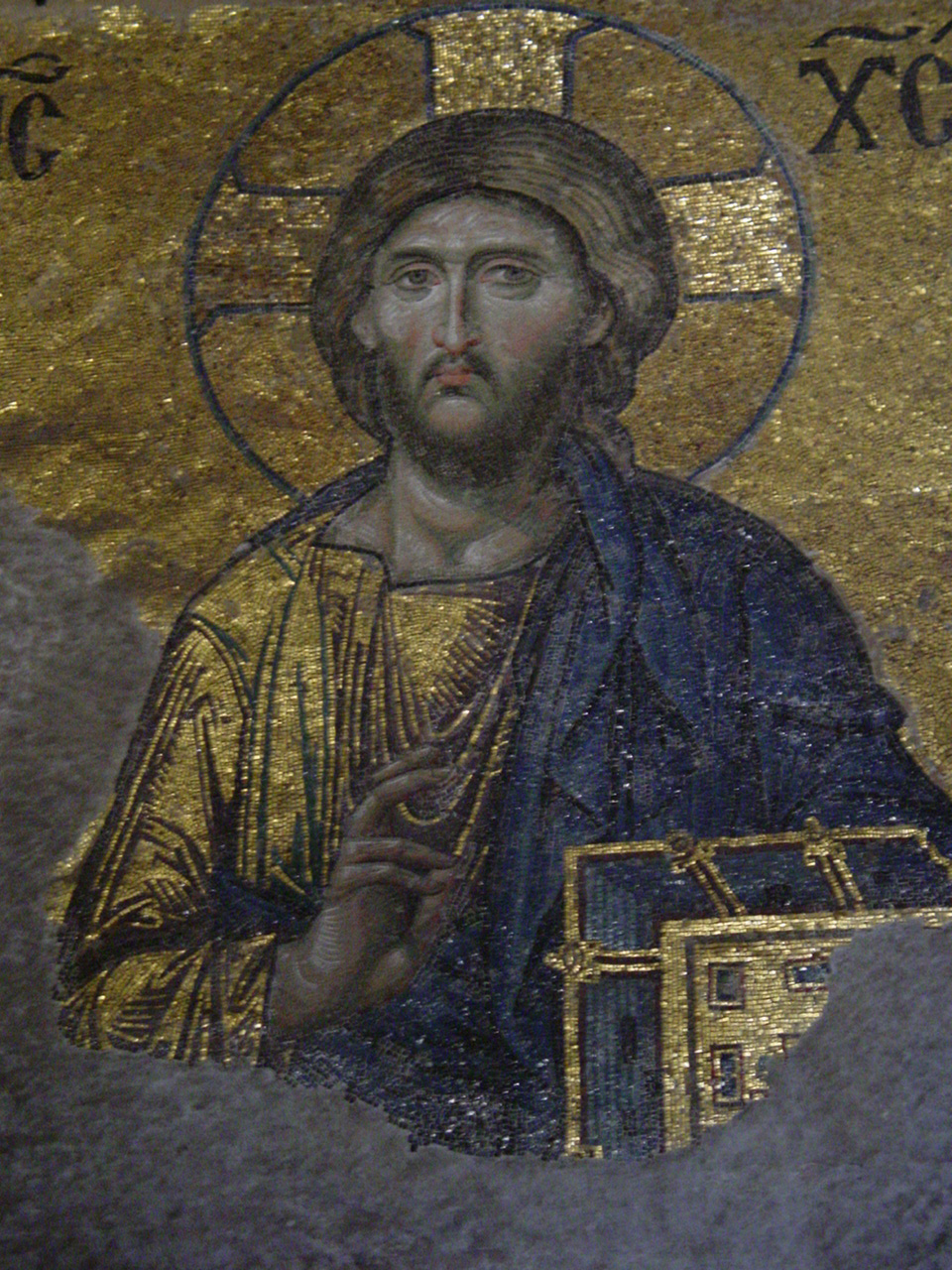
Two of my favourite passages that many scholars think are hymns are the Christ hymn in Philippians 2, and the hymn of the Christ of the Cosmos in Colossians 1. And on Sunday I want to open up the passage in Colossians 1. I want to talk about Jane Fonda, refrigerator hums, and how you are connected to everything that exists.
I know it sounds a little odd, but it’s all in that passage – well maybe not Jane Fonda.
But before we get there this is a passage that many people speed past, or honestly just aren’t familiar with. It has huge major themes of creation, redemption, and how the world exists. It’s mind-blowing in its implications, and all-encompassing in its scope.
So why not take a moment and read it a few times and just let this passage speak to you. Because Christ is part of every thing, and you right now as the passage says. So why not open yourself up to discovering and hearing from him as you listen and read this old hymn.
Christ is the visible image of the invisible God. He existed before anything was created and is supreme over all creation, for through him God created everything in the heavenly realms and on earth. He made the things we can see and the things we can’t see—such as thrones, kingdoms, rulers, and authorities in the unseen world. Everything was created through him and for him. He existed before anything else, and he holds all creation together. Christ is also the head of the church, which is his body. He is the beginning, supreme over all who rose from the dead. So he is first in everything. For God in all his fullness was pleased to live in Christ, and through him God reconciled everything to himself. He made peace with everything in heaven and on earth by means of Christ’s blood on the cross.
Earlier last summer I spoke at this young adult group. I was invited to speak on whatever I picked, at a church I had never been to before. And so of course I picked talking about Jesus, which if given the chance is what I will always pick.
But this amazing thing happened when I went into the room. I knew a huge number of the young adults. In fact everyone on the leadership team other than one or two people had been a part of my youth group at some point.
And what was so amazing to me was to see them continuing to step up into leadership, and creating and giving God space to move. All these youth were there; many of them whom I’d spent hours and hours with and were now discipling others. It was just beautiful.
Now certainly I don’t get to own their decisions to step forward and lead young adults deeper into a relationship with Jesus. But in some ways God did remind me in that moment that we never know what the seeds we plant in others will grow into. That we can never discount the hours we give and pour into others.
The truth is that as human beings, we have a short horizon for time. We do things and expect results, in weeks and months. Sometimes I think God thinks in decades, or centuries. Some of the seeds planted by me, other youth leaders, parents, and friends are now years later bearing fruit. People are being changed, because people years ago poured into this youth who are now young adults. That’s the beauty of God, community, and investing in others.
For me that night to speak, was a reminder that pouring into others is never wasted. I don’t get to own the results. I also can’t own whether or not someone else gets filled up. What I can own and be responsible for is pouring out my life, and letting God do the rest.
And so while I spoke, hoping that God would use my words, God had already spoken so clearly to me. The moment I walked into the room, it was like God was just reminding me, “investing in others is never wasted”. So while I came to bless them, they blessed me and I think that’s how God works.
“The church does not need brilliant personalities but faithful servants of Jesus and the brethren.”
But I think that is the temptation that the church has fallen for. That being big, having brilliant personalities, and preachers, that this is what will save the church. Bonhoeffer disagrees, and so does Jesus. What will save the church is people serving faithfully like Jesus to the world around them.
So to talk about this obviously we needed to talk about the TV show the Bachelor. You might not think that serving has anything to do with the Bachelor, and well you may be right, but here is what we learned on Sunday.
I believe that the TV show “the Bachelor” highlights a lot of our contemporary culture’s values and beliefs. The show has real people saying things that I think give us insight into some of the cultural waters we live in. And one thing you will notice again and again if you ever watch the show is how naturally selfishness comes out. People will say things like, “I just need to explore all my options”, or “I have to follow my heart, and so break yours”. Or even the whole premise of the show isn’t really to find love, it’s not to be rejected leaving without a rose.
So what’s the point? Well it’s pretty simple. Selfishness is deeply rooted in our culture, it is often celebrating in our culture, and it’s actually killing our culture. No world, culture, neighbourhood or friendship can survive the black hole that selfishness creates.
So how do you break selfishness? That’s what we looked at for the rest of Sunday, examining Philippians 2.
In Philippians 2 we read that we must have the same attitude of Jesus. Paul says get rid of selfishness and all its forms. Stop trying to impress people, making yourself out to be great. Focus on humility, don’t just look out for your own interests, look out for others.
And Paul then says, “be like Jesus”. He is seeking to ground this advice of rooting out selfishness in the practice and life of Jesus Christ. Jesus did not seek to grasp his rights, follow his own desires, but instead emptied himself and served others. This is to be our model as Christians. We are to give, to serve, and to empty ourselves.
In essence, Paul says serving others kills selfishness, and moves us in the direction of Christlikeness. Serving others must be at our centre, because it was and is at Jesus’ centre. Our world may be trapped by self-interest but we don’t need to be. We can live differently because of Jesus, we can live like Jesus. We can serve, sacrifice, give, and break selfishness in all its forms. We can love the world, and change the world by serving the world.
The question is, will we?
So we ended with a pretty specific call and challenge. To actually serve at least weekly, intentionally. The truth is that unless we plan how we will serve, life will get busy and make the choice for us. It is far easier to watch the Bachelor than mentor a youth. It is far easier to Facebook than to serve in a soup kitchen. It is far easier to watch a movie than it is to serve your community. But it is not better. So my challenge was simple – find a way to serve at least weekly. Weekly is really the minimum. It is something we should be doing daily with our lives. But weekly is a good start.
So that was the challenge and it’s a challenge I think we need to do for our lives. To be like Jesus, serve, kill selfishness, and love the world.
Sermon Notes:
Big Idea: Serving others is the thing that kills selfishness
Teaching Points:
The church does not need brilliant personalities but faithful servants of Jesus and the brethren. Bonhoeffer
Selfishness is killing our culture.
We have accepted the belief that following our hearts fully is admirable and courageous.
Our culture says “That you are the most important and what you want is the most important. And that your job in life is to gratify your own desires”. David Foster Wallace
Greatness isn’t about yourself it’s about what you give, sacrifice, and how you serve.
Serving others is the thing that kills selfishness.
If you are truly serving it will be an inconvenience to you.
Sometimes serving is hard, but it is never wasted.
If you don’t plan how you will serve, you won’t.
To change a life, give of some of your life.
Adult Discussion Questions:
What stuck out to you from the sermon? What was challenging to you? What was new? Do you think that selfishness is a problem in our world? Where do you see it? Now where do you see it in your own life? How can serving help to break self-interest? When have you served and been changed through it? Where can you start to serve weekly now? Is there a place in your church, community, neighbourhood? When will you start?
Discussion Questions for Young Families
Teach your kids about the importance of serving. Choose a place to serve together. Maybe it’s to make cookies for neighbours, to go to a soup kitchen together, to go to the Gleaners, or other places as a family. Find a way to serve and go about it, make it happen, and see how it starts to change you.
Challenge for the Week: To intentionally serve weekly.
On Sunday we are looking at how we as Christians are called to serve. One of the marks of a Christian must be that they are serving consistently, intentionally, and with purpose. A Christian’s life who doesn’t change others, isn’t truly a Christian life.
So last week I shared with our church how we need to serve. This week I want to pursue that a bit deeper. And I want to do that through, of course, talking about the Bachelor. That’s right this Sunday is Bachelor Sunday…which is something I’ve never said before and will probably never say again.
But one thing that I think this show demonstrates to us is how easily it can become to get wrapped up in self-interest. Self-interest is something that kills relationships and it is killing our culture. A culture obsessed with self has no room for anyone else. And this is what we as Christians need to be fighting against, and the only way we can do that is to serve.
Serving kills selfishness and that is something that needs to happen.
So before we get to Sunday and looking at this all the more in-depth ask yourself this question: “are you serving anywhere consistently?” Because life has a way of making ourselves the priority, but that is not the Jesus way. So in your own life are you serving? Because if we want to love the world – we need to serve the world.
Jesus is particular, God is generic. It is easy to follow a generic God because you can fill the term “God” with any presupposition you please; it is difficult to follow Jesus because then you have to take seriously his teachings on discipleship, on what exactly following him entails. Michael Hardin
Following “God” is easy, because it is generic. You can be a “spiritual” person, or a person connected to the “energy” of the world or anything like that easily. Because as Michael Hardin points out, you can choose the things that you will follow or connect with. You can create the path you want to follow. Following Jesus though means following his path. The difficulty path of self-denial and other-centred love. The path that values sacrifice for others, and loving at a level that seems ridiculous at times. But that’s the beauty of Christianity; it’s about Christ. It’s about following him, and not giving into the easy things but shooting for the difficult life transforming things. Things that Jesus teaches us to do like:
Love your enemies
Forgive everyone
Judge Not
Fear Not
Worry Not
Each of those things is simple to understand, and will take a life-time to learn to practice. Which is precisely the point. Following Jesus is a path and a journey that takes a lifetime to learn. Learning to love your enemies and that there is no them, only us is incredibly hard. Learning to not let fear and worry have holds in our hearts isn’t a weekend retreat thing. It’s a lifetime thing.
This is why G.K. Chesterton said something truthful in, Christianity has not been tried and found wanting; it has been found difficult and not tried
But I believe it’s in the trying that life is found. It’s in the striving after following Jesus, his path, and his way of life that life is found.
And my question in all of this is this: if you’re a follower of Jesus are you following his path?
Because as Michael Hardin reminds us, it’s easy to follow “God” following but Jesus means following his path. And his path leads to life, it’s not easy, it’s hard but it’s absolutely worthwhile.
So out of those 5 things listed above (judge not, fear not, worry not, forgive everyone, love your enemies) which one do you need to work on today? Which one do you need to focus on and give some attention to? Which one do you need to try to follow today? Because following Jesus means walking his path, and this is the path he laid down. It’s not an easy one, but it is a life-changing one.
Well on Sunday we looked at a passage most people have never heard preached. Because well there is no other way to say it, but this passage makes Jesus to seem to be a racist; it’s Matthew 15:21-28.
But when you dig into it you start to realize something that should be obvious – Jesus isn’t a racist, we are.
And I mean that in the truest sense, that we all have groups of people that we struggle with. Maybe it’s not along race lines, maybe it’s along sexual lines, or theological lines, or geographical line, or political lines. But the truth is that we all have groups that we love to exclude, scapegoat, and blame. Groups of people that don’t really deserve to be in on what God’s doing. Unless of course they change and become just like us…then they can.
But it’s this underlying “us vs them” thinking and scapegoating that Jesus challenges in a unique passage. In this story Jesus is actually enacting out a parable. He is telling the truth but as Emily Dickinson says, he is telling it slant.
Jesus teaches the disciples that what makes someone clean is what comes out of hearts. And he then takes them specifically on a trip into Canaanite country. You know the hated enemies of the people of God. You know the people that God said wipe out. You know the blood enemies of the Israelite people. There is bad blood between these two groups.
And a woman comes up and asks for Jesus to heal her daughter. And then there is this odd interaction between Jesus and her where he seems reluctant. Where he seems to privilege Israel as a group over an individual right in front of him that needs healing and hope. This is a completely uncharacteristic with Jesus in every other part of the gospel. So what’s going on?
What’s going on is that Jesus is trying to reveal the blatant racism and us vs them thinking in the disciples. And this type of thinking lurks in our hearts and is so hard to change without experience, teaching, and blog posts certainly don’t do it. The power of the Spirit through relationships does.
So Jesus leads his disciples to have this encounter with this woman. And when she first approaches him, says nothing, but the disciples do say something. They try to get rid of her, and ask Jesus to send her on her way. They demonstrate what’s in their hearts, hate, hurt, and lack of desire to help and heal. They don’t believe she deserves their help.
So Jesus has a conversation with her that sounds odd to us. But to the disciples it must have been rupturing and revealing. Because I believe Jesus is saying everything that is going on in their hearts, their excuses as to why she should be sent away.
Let’s be clear on one thing, Jesus didn’t travel all the way into this country to avoid this woman or refuse to heal her. He travelled all the way here to heal her, and the disciples’ hearts which are fixated with us vs them. He wants to heal them, and her.
So Jesus brings the disciples into this interaction and experience where their hate is exposed so that it can be changed. Because if there is any hate within us, it needs to be changed.
So the main point we landed on Sunday after working this all through was that we are called to serve and help everyone, even those we hate. Especially those we hate. We asked the Holy Spirit to convict us if there people, groups, or individuals we believe “God can’t be active there”, or “I don’t need to help them” or “they don’t’ deserve my help”. Because what we see is that God is active even in the enemies we think where God can’t be found. What we see in this passage is our need to serve and help and heal everyone. And we all know that. Christians are to love the whole world, the trouble is when it gets to specifics to that person, that group, that co-worker. We find excuses and reasons not to help and heal. And that’s what this passage is about – taking away our excuses revealing the ugliness of hearts and giving us a chance to change.
So we left with a challenge. To be open to serving the needs of those around us this week – especially those we hate. That if there are people we struggle with, these are the people to serve this week.
Not an easy challenge, but following Jesus has never been easy. It’s been life-changing but not easy. So don’t settle for easy, challenge yourself, reach and love and see what God might do in you, through you, and around you. Because God is moving, and he wants us to join him.
Sermon Notes:
Big Idea: You are called to serve and help everyone, even the ones you hate
Teaching Points:
Disciples are to love God, love others, and love the world.
Love towards the world is to mark our lives
“Tell all the truth but tell it slant” Emily Dickinson
The Canaanites are ancient enemies of Isreal
We think with “us vs. them”
Faith and hope and God’s amazing working can exist outside the people and places we expect to find it
We are called to serve the entire world, not just the people like us who we like.
You are called to serve and help everyone, even the ones you hate
The mark of a disciple is to be someone who serves everyone.
There is no “them”, there is only “us”.
There is no one who is outside the scope of God’s love and healing.
Adult Discussion Questions:
What stuck out to you from the sermon? What was challenging to you? What was new? Was this a new passage for you to think through? Why do you think that sometimes “experiences” teach us more than straight “teaching”? Who do you think we as the church struggle with loving – like the disciples with the Canaanite woman? How can we serve them? Who do you struggle with loving? How can you serve them?
Discussion Questions for Young Families
Today talk to your kids about loving and serving everyone. Ask them who they think gets left out, and needs some love. Then do something about it. If it a classmate invite them over, if it’s a family make some food for them. Serve, but do it together.
Challenge for the Week: To go about your week looking for needs, and meeting them.
On Sunday we are opening up a passage of Scripture that most people have never heard a sermon on. The reason is…well how do you put this nicely…but Jesus seems either like a jerk or a racist or both.
Either way, most evangelical pastors avoid it, because they aren’t sure what to do with it. Liberal Christians see it as an example of the humanity of Jesus, and how he is “convicted and converted to being world-centric”.
But I think buried in this story is something so revolutionary, so incendiary, so transformative that it’s something that everyone needs to experience. Because this story will bring up the depths within us that we, as nice Canadians, keep buried. It’ll bring up the stuff that the Holy Spirit wants to change within us. And as I’ve prepared I’ve felt the Holy Spirit do that within me.
So that’s my prayer for Sunday – that the Holy Spirit might change all of us. But to begin why not read the passage and ask God to begin the process of changing you because we all need that:
Leaving that place, Jesus withdrew to the region of Tyre and Sidon. A Canaanite woman from that vicinity came to him, crying out, “Lord, Son of David, have mercy on me! My daughter is demon-possessed and suffering terribly.” Jesus did not answer a word. So his disciples came to him and urged him, “Send her away, for she keeps crying out after us.” He answered, “I was sent only to the lost sheep of Israel.” The woman came and knelt before him. “Lord, help me!” she said. He replied, “It is not right to take the children’s bread and toss it to the dogs.” “Yes it is, Lord,” she said. “Even the dogs eat the crumbs that fall from their master’s table.” Then Jesus said to her, “Woman, you have great faith! Your request is granted.” And her daughter was healed at that moment. Jesus left there and went along the Sea of Galilee. Mathew 15:21-28
People are uncomfortable with grace. It’s just true, and I get it because we raise people to react against grace. Because grace, simply put, is not fair.
As I seek to raise my three kids with Krista, one of the things I hear all the time is, “That’s not fair”. We somehow breed or develop in our kids (or at least my kids) this radar for unfairness. That leads to statements like this all the time:
Why did Asher get the bigger cookie?
Hudson’s played with the car too long.
Daddy!!! It’s just not fair!!
And in our household, in many ways, we try to be fair. We talk about being fair, and about sharing all the time. Saying, “Hudson, it’s not fair that you get all the Lego, share with your brother”. Or saying, “Asher, you can’t take all of the books and sit on them, you need to let Hudson have one too”.
But what I think is so interesting is that grace by its very definition doesn’t play according to the rules of fairness. Grace is unfair and it will always be unfair. We see grace and say, “That’s unfair” and it’s true. That’s why grace is so powerful because it gives to us things we don’t deserve, and things that, simply put, aren’t fair.
Francis Spurffod puts it this way:
Something kinder than fairness is, by definition, unfair; and once you take grace seriously it immediately threatens to produce scandalous unfairness in human terms.
It’s true. Grace produces scandalous unfairness in human terms. Which is why it’s so moving, transformative, and divine when truly given. Because in human terms there is nothing fair about grace, about second chances, about 77 chances, about forgiveness, about new starts, about welcoming people who don’t deserve it. There is nothing fair or human about it; grace is divine no doubt about it.
So today why not give a little bit of grace today. Why not be rebellious and rebel against fariness, and spread a little grace divine life today? Why not surprise someone with giving them something they don’t deserve, something that isn’t fair, something that is well…gracious.
Because the only reason that I get to follow Jesus is because God decided to be unfair and give me something I didn’t deserve. The least I can do is to try to follow his example and be a little unfair today, and give someone grace.
On Sunday we looked journeying with others again. This is a key mark of a follower of Jesus, that they don’t follow him alone. Because we all need others, we need support, direction, and love. Life is meant to be lived together.
And this is actually what we discover way back in the very beginning. God shows up to Adam and says, “It’s not good for man to be alone”. And here I don’t think he is just talking about Adam specifically but humanity in general. That we were not created to live and journey in this world alone.
What is quite amazing is that pre-sin Adam still needed someone. That it’s not sin and challenges that causes us to need to journey together, but something in our very makeup. That it is simply put not good for humanity to journey alone. We all need others. We need a “helper” or “companion”.
Now this word in English gets read through patriarchal lens and it makes it seem like what Adam needs is a domestic wife to support him. That he needs a little helper at home. And this is not only demeaning to women but to God too, because that is not what God is saying.
God is actually saying it is not good for Adam to be alone, he needs a helper. He needs someone to save him, to protect him, to sustain him, to shield him, or to journey with him. The word “ezer” (helper) is most often used in the Psalms to refer to God’s activity of saving, sustaining, protecting, rescuing, or giving hope. So a “helper” is not a nice little addition to your life, but an active presence that guarantees your future through saving, sustaining, protecting and rescuing.
God is saying I believe that we all need those people in our lives. We all need companions who help us to journey into life, because life isn’t meant to be lived alone. This was the main point on Sunday, that life is meant to be shared with others. So I ended with a very specific challenge, to journey with two other people closely for the rest of this year. I truly believe that it isn’t good to live alone, so I challenged all of us to journey with others closely for this whole year. Two people at minimum (and your spouse doesn’t count) because we all need companions to rescue, protect, help, save, and give us hope.
For some of us we are doing this, and just need to keep doing this. For others we have friendships that can become deep and committed but we need to invest in them. And for others we don’t know where to start with relationships, but we are called to pray for them. Because God still wants to make sure all of us don’t live alone but with life-giving relationships.
So whether that means investing in your good relationships, investing in your potential relationship to become good ones, or investing in prayer for God to help you create some. We are all called to invest in relationships to live with and for one another. Because God is right, “It is not good to live alone”, we are called to live together.
Sermon Notes:
Big Idea: Life was meant to be shared with others, and we need to journey together
Teaching Points:
It is easier to be selfish and self-interested in our world, but it not better
That we need to be journeying with others, if we want to journey with Jesus
Life is not complete without someone to share it with
“To be rooted is perhaps the most important and least recognized need of the human soul”. Simone Weil
Commit to journeying closely with 2 other people this year
Adult Discussion Questions:
What stuck out to you from the sermon? What was challenging to you? What was new? What relationships have impacted you most? Which relationships do you have now that are closest? Who have been your “ezers” or helper and companions in life? Are there people in your life who are this to you now? Are there people in your life who you are like this for them? Can you commit to journeying with at least two people for this year?
Discussion Questions for Young Families
Journeying together isn’t just for adults but for kids and families as well. Studies show us that kids need 5 adults caring and pouring into their lives to truly thrive. So spend sometime thinking about the adults who can pour into your family, and what family you can pour into. Who are you journeying with as a family? And go spend time with them this week.
Challenge for the Week: Commit to journeying closely with 2 other people this year
Who you journey with is often who you become like.
This is just true, and it’s so subtle that we don’t often see it. But we end up becoming like those who are around us.
So on Sunday we are going to be talking about journeying together and why it matters. Why we are made to be together. Why we each need a companion, a friend, and a community we are moving with.
So why not think about that right now? Who are you journeying with? What are they like? Because it’s probably what you are becoming like.
Do they invest in you? Do you invest in them?
Because the truth is relationships are sacred, and are meant to be shared. So who are you creating sacred friendships with, and how are you sharing them?
And come Sunday we’ll talk more about journeying with and deeper with those sacred relationships.

 On Sunday we are going to look at one of my favourite passages in the Bible.






 { Andrew Mills }