Blog

The Brilliance of Dr. Seuss, the Grinch, and the Root of Bitterness

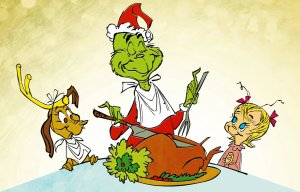
happyEndingOn Sunday we looked at the parable of “How the Grinch Stole Christmas”. In this movie we saw how Grinches are people who enjoy wrecking other people’s joy. That they are bitter, hateful, spiteful, and often live alone up on a mountain with a dog – or maybe cats too.

The point is that with the Grinch Dr. Seuss actually perfectly portrays people in our own lives: people who are petty, small, angry, and bitter. Part of the difficulty with Christmas is that we often end up in close proximity to Grinches. And this can be dififcult and stressful but the question isn’t so much how do we deal with such people? But instead, one question deeper – how do people become Grinches?

We looked back to the movie and again Dr. Seuss is right on. People become grinches when their heart shrinks. When is starts to grow small and cold. One of the number one things that causes this is bitterness. Bitterness will shrink and shrivel your heart faster than anything.

So if that’s how you become a Grinch, how do you prevent that? Because Grinch’s aren’t just around us, but also inside us.

For that we looked, not to the movie, but to Hebrews 12:12-14 where we read this, “Work at living in peace with everyone, and work at living a holy life, for those who are not holy will not see the Lord. Look after each other so that none of you fails to receive the grace of God. Watch out that no poisonous root of bitterness grows up to trouble you, corrupting many”.

We camped out here for a while, because the author of Hebrews gives us four really practical steps to prevent “grinchiness”. The first is he teaches us to work at peace. To never give up on peace, to never give into apathy, but instead to work as best we can at peace. He also reminds us to live a holy life. And a holy life looks like Jesus’ life. So we could say to work at living like Jesus. Thirdly, he teaches us to rely on one another, and care for one another. Grinches live lonely lives, and we need to be reminded of the importance of caring and supporting one another. And last but not least, to watch out that bitterness doesn’t take root in our hearts.

What we all know that is living like the Grinch isn’t life-giving. So make a choice to live differently. That’s what changes the Grinch, he makes a decision and his heart grows a little bit. That’s what we need to do too.

So we ended with a challenge to prevent Grinchiness, by rooting out bitterness. To this Christmas work at peace with those who it’s tough, to work at living like Jesus, to ask for care and support for those around us.

And if you get a chance why not watch the movie, because it’s great, and a classic.


Sermon Notes:

Big Idea: Prevent Grinchiness, by rooting out bitterness

Teaching Points:

  • Parables hide in plain sight.
  • A Grinch is someone whose heart has shrunk and shriveled.
  • Grinches aren’t just around us, but also inside us.
  • That the line separating good and evil passes not through states, nor between classes, nor between political parties either — but right through every human heart — and through all human hearts. Aleksandr Solzhenitsyn
  • Work for peace.
  • Holiness looks, and lives like Jesus.
  • Work at living like Jesus.
  • Work with one another.
  • Root out Bitterness with making a decision.

Adult Discussion Questions:

What stuck out to you from the sermon? What was challenging to you? How did God speak to you through it? What was new? What are some of your favorite Christmas movies? Do you have any Grinches in your life you have to deal with? What has been helpful in learning to deal with them? Is there any bitterness developing in your heart that needs to be dealt with? Whom do you need to work at peace with? How can you do that?

Discussion Questions for Young Families

Watch the movie, “How the Grinch Stole Christmas”, and then talk about how bitterness can make you into the Grinch. Talk about how it’s important to be grateful at Christmas, to work for peace, and to give. Ask them if there is anyone they want to give to.

Challenge for the Week: Root out bitterness.

The Grinch as a Parable

how-the-grinch-stole-christmas-originalThis Sunday we are showing a parable at church. Of course it’s the classic movie, “How the Grinch Stole Christmas”, the classic version.

This movie is actually a great parable of what happens when we let bitterness take root in our hearts. It’s actually a really good glimpse into what happens when we stop trying to make peace and live in harmony, and let our self-interest guide us.

So we are going to look at this movie and see how we can not only deal with the “Grinches” in our lives, but how we can ensure we don’t become a Grinch.

Because the slide to becoming a Grinch is often a subtle and slow slide. But it’s one that can be prevented, it can be seen, and it can even be turned around.

So that’s where we are going – but here’s some homework. Watch the Grinch a) because it’s a good parable b) because it’s an awesome movie. I mean who can’t love it when it has lines like, “you’re as prickly as a cactus, and as slippery as an eel” 🙂

Why 4 Year Old’s Are the Best Theologians

I think I might be raising a theologian, or maybe better put Hudson is teaching me to be a better theologian. Hudson shared this with me about his grandpa who died, but whom he desperately wants to see.

“Daddy you know Grandpa is coming back because he loved God, just like Jesus who loved God died and came back”.

Yep that about covers it, that’s Easter, resurrection, and good theology all wrapped up in one simple sentence. Sometimes the young are the smartest.

“We’re A Couple of Misfits”

On Sunday we talked about the feeling of being a misfit. We watched a clip from Rudolph the Red Nosed Reindeer where Hermey and Rudloph sing, “We’re a couple of misfits, we’re just a couple of misfits, what’s the matter with misfits, that’s where we fit in”.

And then they sing something so true, “We may be different from the rest. Who decides the test, of what is really best?”

Isn’t that true?

Haven’t you ever thought that?

Why do they get to decide what’s best? Why do they get to decide the test of fitting in or not. And they might be your father, mother, sister-in-law, neighbour, whatever.

The point is that many of us don’t’ feel like we fit in around Christmas. Christmas can actually be a time where we are reminded of the fact that we don’t fit in. But this is the exact opposite of what the Christmas story teaches us.

The Christmas story teaches us that Christmas is about welcoming the misfits.

If you think about it at the birth of Jesus we have the Magi, the Shepherds, and Mary and Joseph. All misfits.

The Magi are foreigners, people of different race, religion, and politics. People who are rich and in a different class than Mary and Joseph. Yet they are welcomed in.

The shepherds are outcasts too. They are misfits for sure. Shepherds were people who weren’t marriage material, who were often people of “dubious character”, who were literally on the outside of society. They were misfits.

And Mary and Joseph were too. They clearly didn’t fit in with their family, because no one would welcome them in while she was pregnant. Instead, they were forced to a full inn. People I’m sure thought that Mary had some “character flaws” of her own, that she was pregnant and not yet married. So she and Joseph too are misfits.

Yet what do we see? Jesus’ birth bringing all these misfits together.

One the first things Jesus does when he enters the world is to welcome people who don’t feel like they belong. Is to draw people together who are often left out.

So Christmas, if it’s about anything, is about welcoming. It’s about hospitality. It’s about making room for the misfits in our lives.

So we close with a challenge. That if you feel like a misfit to know that you are welcomed to celebrate with our church, and with Jesus for his birth. Because Christmas is about welcome.

And if Christmas is about welcoming, we should practice welcoming. We need to reach out to the misfits in our lives, and invite them in. It might not be easy, but it really is necessary to live out the meaning fo Christmas.

Because Hermey and Rudolph’s song has some truth, “We may be different from the rest. Who decides the test, of what is really best?” Well, who decides the test, is God. And his decision is to welcome those different from the rest, so I think it’s something we should do too.

Sermon Notes:

Big Idea: Christmas is about welcoming misfits

Teaching Points:

  • Being a “misfit” is a feeling we can all equate to, but hate having.
  • “We may be different from the rest. Who decides the test, of what is really best?”
  • The original Christmas was full of misfits.
  • The Wiseman are foreigners, rich, and different in terms of race, religion, and class.
  • One of Jesus’ first acts upon entering the world is to draw people of difference together.
  • Shepherds were some of the lowest of the low.
  • Jesus’ coming draws misfits together.
  • Christmas is about welcoming the misfits of the world.
  • Jesus decides the test of what is really best.
  • If we want to practice Christmas, it’s about welcome.

Adult Discussion Questions:

What stuck out to you from the sermon? What was challenging to you? How did God speak to you through it? What was new? What are some of your favorite Christmas movies? When have you had a time where you didn’t fit in? How did you handle it? Are there places you don’t fit in now? If Christmas is about welcome and including, who should you be including this Christmas? How might you do it? Who can help you to keep to it?

Discussion Questions for Young Families

Take sometime and watch Rudolph the Red-Nosed Reindeer. Afterwards spend sometime talking about the importance of welcoming “those who don’t fit in”. Ask them who they might want to welcome in their school, family, or friends and how they might do it. Then actually help them to do it!

Challenge for the Week: Welcome a misfit; and join in if you are a misfit.

The Christmas Story and Rudolph the Red-Nosed Reindeer

Rudolph-Red-Nosed-Reindeer-007This Sunday we are using Rudolph the Red Nosed Reindeer as our jumping off portion of our sermon. I’m very excited about it, because this is one movie I watch every year. I have watched this movie ever year of my life that I can remember. It helps that this movie is almost double my age…but it’s still good!

But here is what the movie really gets to really well. It gets to the fact that so many of us don’t feel like we fit in with the world. That the expectations that are placed on us, are ones we can never live up to.

And many of us feel this reality all the more at Christmas.

And that’s what I want to talk about on Sunday, the feeling of not fitting in. The feeling of being a bit of a misfit. The feeling of not being included, and what Christmas has to say about that.

Because the truth is this: if Christmas is about anything, it certainly is about welcoming.

So that’s where we are going. But before we get there, why not grab some popcorn and watch a great Christmas movie – Rudolph the Red Nosed Reindeer, and a Bumble that bounces.

Does Life Flourish Around Your Church?

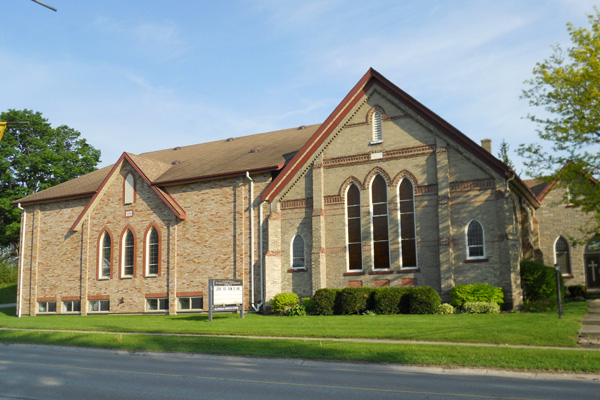
Plattsville_Missionary_ChurchI had the unique opportunity with working with two different churches outside of my denomination, and normal connections in the past month. Both times working with the church was the first time I’d encountered or met them. But the two encounters couldn’t be more difficult.

The first was difficult, at times troubling, and it was draining. The second church was gracious, open, and quite life-giving.

What I noticed was this. Life around the second church seemed to flourish, whereas,  life seemed to wilt around the first.

And of course, there could be a whole host of reasons why at this particular time one church seemed more life-giving than the other. Bad days, imperfections, and mistakes happen to us all.

So I’m not judging either church, but instead thinking about how we should judge or evaluate churches.

Traditionally churches measure budgets, buildings, or numbers. What if instead we started measuring the flourishing of life around the church?

Isn’t that a better metric? A truer metric?

Jesus says he will bring life. So it seems to me that if Jesus is being followed deeply, truly, and freely – life should flourish.

I think it’s a good question to ask about the churches we lead, participate in, or are a part of. I also think it’s a great question for us to ask personally, as people who are the church. Is life flourishing around us? Do our neighbors feel like we are a drain, or a welcome part of their lives? Is Jesus so active in our lives, that life seems to spring around us?

The point is simple: life flourished around Jesus, and it should flourish around his followers as well. It’s not always easy, but it is something to strive for. Something I know I want to strive for in my life and in my church. What about you?

Advent and “A Christmas Story”

movieposterThis Sunday we looked at the movie A Christmas Story to give us a fresh perspective on the Christmas story. And we watched this clip of little Ralphie so deeply hoping for a Red-Rider BB Gun.

The point of the clip on Sunday was that in our day and age – we don’t hope like Ralphie does. We are so generally worried about “living in reality” that we reing in hope. We don’t place our hopes on getting this one thing.

But that’s not what we see actually in the life of Mary. She is given an amazing promise of God, something that seems not just unlikely but impossible. But Mary doesn’t let doubt in, she doesn’t temper her hope with “realism”, she doesn’t lower her expectations, but let’s her hope in God run wild. Listen to what she says in Luke 1:46-55:

Mary responded, “Oh, how my soul praises the Lord. How my spirit rejoices in God my Savior! For he took notice of his lowly servant girl, and from now on all generations will call me blessed. For the Mighty One is holy, and he has done great things for me. He shows mercy from generation to generation to all who fear him. His mighty arm has done tremendous things! He has scattered the proud and haughty ones. He has brought down princes from their thrones and exalted the humble. He has filled the hungry with good things and sent the rich away with empty hands. He has helped his servant Israel and remembered to be merciful. For he made this promise to our ancestors, to Abraham and his children forever.”

Mary hopes completely in God. She lets her hope in a merciful and strong God run wild. She doesn’t temper her hope with realism, or pragmatism. She hopes against all odds, that God has moved and is working within her.

And I think this is something we need to learn at Christmas especially. We need to learn to hope because Jesus is coming. Jesus is coming and with him everything changes. So we need to learn to hope, we need to let our hope run wild. That was the main point of Sunday. To let our hope in Jesus run wild.

And like Ralphie so deeply desiring a BB Gun, I asked everone one question: What is it you really want for Christmas? What are you really hoping for? And we’re not talking about gifts or deep desires. Is it for a marriage or body to be healed? To finally find a spouse, or purpose? To have a child, or a have a relationship healed? What is it you really want for Christmas?

Because I think that Christmas is a time to let our hope out, to share with God what we need and place our trust in him. That’s what Mary does, and I think that’s what we should do as well. And if there is ever a time to hope, I believe it is now.

So why not today answer that question: what are you hoping for this Christmas? Why not share with Jesus and trust in him to act. Because I know we often think about, “what happens if I get let down?” Well I think Christmas is about asking, what if God shows up and comes through. Because that’s what he did way back when, when he entered the world. And I think he can do it today.

So what are you hoping for?


Sermon Notes:

Big Idea: We need to learn to hope.

Teaching Points:

  • Advent is a time where we wait and prepare for Jesus.
  • We don’t hope all that much anymore.
  • We don’t get our hopes up, because it is easier, but not necessarily better.
  • We need to learn to hope recklessly.
  • As Christians we can truly hope.
  • What do you really want this year for Christmas?
  • The more I considered Christianity, the more I found that while it has established a rule and order, the chief aim of that order was to give room for good things to run wild. G.K. Chesterton
  • I believe in Hope, capital H, because I believe in Jesus.
  • Hope is the act of taking the next step. Karl Barth

Adult Discussion Questions:

What stuck out to you from the sermon? What was challenging to you? How did God speak to you through it? What was new? What are some of your favorite Christmas movies? Would you say you’re someone who hopes – or keeps your hopes realistic? How come? What are you hoping for this year? Who are you hoping with that can support you as you watch and wait for God to move? What reasons do you have to hope in God? How has he been faithful to you in the past? How might he be faithful to you this advent?

Discussion Questions for Young Families

Spend sometime talking with your kids about hope. If they write down what gifts they are hoping for, why not have them make another list. “Things I’m hoping for, or things we can pray for”. Have them make a list of things and then pray over those things, and bring those things to Jesus.

Challenge for the Week: Let your hope run wild.

Christmas at the Movies

This Sunday we are starting a brand new series called, “Christmas at the Movies”. We are looking at some of the traditional Christmas stories, and themes and using movies to help us gain a fresh perspective on a changeless story.

So join us each Sunday as we look at these movies over the next five weeks:

  • A Christmas Story
  • Rudolph the Red Nosed Reindeer
  • National Lampoons Christmas Story
  • How the Grinch Stole Christmas
  • It’s a Wonderful Life

I know your favorite movie might not be there but hopefully one of them is, and hopefully we see you this Sunday!

Christmas Movies

Pretending in Leadership

926343_45454100Dan Rockwell, tweeted this a few days ago:

Pretending we know more than we know is one reason we don’t know more.

And that is absolutely true. Pretending we know more than we know isn’t one reason we don’t know more – it’s the reason.

To say, “I don’t know” is one of the least accepted things in our culture. Especially in business, leadership, and in theology today. To say “I don’t know” is tantamount to saying, “I’m not a real leader, an expert, or capable”.

But this pressure to pretend and posture in our culture is killing our leadership and influence.

Another way you could to put it is this: arrogance is killing our leadership and growth.

Or as the Bible puts it, “Pride leads to disgrace, but with humility comes wisdom”.   Proverbs 11:2.

The point is that if we want to grow, if we want to learn, if we want to lead well’’, pretending has got to go. Arrogance has got to go. We need to learn to grow humility, to learn from those around us, and to be okay with saying “I don’t know”. And as we do this not only will we become better leaders, but better people.

Faith Isn’t “Believing in God” ~ Its Trusting in God

1341194_84514919On Sunday we looked at the topic of faith. And rather than seeing faith as belief, we talked about how faith is really all about trust. Faith is about trusting in God, and putting that trust in action. Those are the two aspects to faith: trusting in God, and putting trust in action.

And this is such a different, healthier, and more biblical way to look at faith. Rather than seeing faith as a set of intellectual beliefs or doctrines, see faith in a relational way. See faith as putting trust in a person, not just believing certain things about a person.

That’s what we looked at on Sunday. How Hebrews presents faith as an active thing, a trusting thing, not just a belief thing.

We ended asking a serious but important question: do you trust in Jesus? This moves the discussion beyond just debating doctrines, and positions and moves to a heart level. Do you trust Jesus? Do you trust him to guide you? Do you trust him to care for you? Do you trust that his way of living is the way of living?

Because this is really what is at the heart of faith. Living a life of trust.


Sermon Notes:

Big Idea: Faith is trust in Jesus, and putting that trust in action.

Teaching Points:

  • Culture sets our normal.
  • Faith as belief is the normal way of thinking about faith.
  • Faith is trusting in God, even in the dark.
  • Faith is trust in God, and putting that trust in action.
  • Trust without action isn’t real.
  • Placing our faith in God is never wasted.
  • Are you willing to trust Jesus?
  • Trust can begin with a decision.
  • Is there some junk in your life you need to get rid of?

Adult Discussion Questions:

What stuck out to you from the sermon? What was challenging to you? How did God speak to you through it? What was new? How amazing was that camel picture?

How have you thought of “faith” before? Why is it important to place trust in Jesus in the tough times? What helps you to do that? How is your trust in Jesus right now? Is it high or struggling? Is there any junk you need to get rid of? Who can help you do that? Can you bring them in?

Questions for Young Families:

Talk with your kids how faith isn’t just about believing but actually trusting. Why not try it out practically to show the difference and do “trust falls” with your kids to talk about how trust means stepping out.

Weekly Challenge: Trust in Jesus and live out that trust.