An indifferent church isn’t a church

stormy-church-1545280-1280x960

I read this quote a little while ago, and just couldn’t agree more. I have lots of thoughts on it, lots of ideas how this should shape us. But I think my thought’s will convolute the power of this simple quote. So all I would say is this: we should read this thought, and let it drive us into action because its true.

If a local Church falls into indifference as to what is going on in the rest of the world, it is certainly not a Church. John D. Zizioulas

Thoughts?


Getting ready for God’s Future

819V0oTxp0LSo here is something basically most of you know: I read a lot…like a lot.

I mean as in whenever we travel Krista and I have fights over the amount of books I’m bringing and the space they take up (at minimum is 1.5 books per day). Did I say I read a lot?  Krista would say this is because I’m a nerd…I say it’s because I like learning. Both are true.

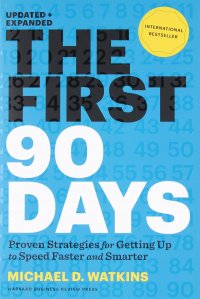
But what I’m reading right now is a great book called “Your First 90 Days”. I’m reading to prepare for a change in our lives. I’m trying to ensure that I’m prepared for the future that is coming as best I can. So for me this means reading…well at least more than 5 books.

But I bring this all up for a specific reason. While out for dinner the other night I tell Krista all about this book and how great it is and she said, “I like it that you’re preparing for our future”. And that comment just really stuck out to me. Because I would say generally I’m not preparing for the future I’m reacting to it. And maybe you can agree. 

So my thought and reason for bringing this all up is to ask you one simple question, “What would it look like to prepare for the future God has for you?” What would that look like for you? Are there dreams you have? Are there hopes and things you believe that God has in store for you? And then my question is this – how are you preparing for them?

Because I believe that God has goodness in store for all of us. I believe, like Ephesians says, that God can do infinitely more than you could ever hope or imagine. And if that is true how are you readying yourself to receive it?

Maybe it’s digging into the Bible more. Maybe it’s really learning to pray. Maybe it’s learning to trust in small little things, so you can trust in big moves. Maybe it’s learning a new skill. Maybe it’s taking a new class. Maybe you dream of launching a business, so you are asking some people to mentor. My point is that I believe goodness is before us, and we all need to prepare to receive it. For me, of course, that’s reading…but what might it look like for you?

Because I have a little hunch, after Krista’s comment, is that I may have missed some of what God has had for me in the future because I wasn’t readying myself for it. All I know is that I don’t want to make that mistake again. And my guess is you don’t want to either. So what can you do, start, or commit to – to begin to get ready for the future God has for you?

The Cross is Jesus Suffering with Us and Because of Us

OLYMPUS DIGITAL CAMERA

Today I want to take a look at the paradoxical nature of the cross. The cross is simultaneously judgment, and forgiveness all in one. And whether the cross is judgment or forgiveness is often the result of perspective.

Andrew Sung Park writes this,

“When the cross of Jesus is seen from the perspective of the oppressed, it signifies God’s suffering with them; seen from the perspective of oppressors, the cross means God’s suffering because of them”.

And this little difference – makes a huge difference.

The truth is that God suffering on the cross signifies God’s solidarity with all who have been abused, oppressed, or hurt through evil. God knows what it is to be killed by an empire about power, oppression, and might.

Yet the cross is also simultaneously reminding us that God’s death is because of oppressors. That the death of Jesus Christ is the result of oppressive systems, people, and regimes that use violence to make peace. The cross stands in judgment of those systems, and offers forgiveness to those who are oppressors.

The trouble with this, or the offensive part of this is that we like to most identify with the oppressed. We like to most identify with the God who suffers with us, not because of us. 

But the truth is that I am not really all that oppressed (I’m white, western, male, and educated). And the reality is that most of us probably reading this are not the oppressed in many significant ways. Through simply being born in the West many of us have inherited much privilege that others do not have.

I bring this up because I know personally I would much rather look at the cross as a place of God’s solidarity with me, but I know if I’m going to be honest I also need to look at the cross as a place of God’s judgment with me. Of the ways in which I can and do participate in systems that hurt other people. The difficulty is that in today’s day and age we don’t often see the ways in which our actions contribute to hurt around the world. We don’t see how our privileges might be at someone else’s expense.

I say this all not to make anyone feel guilty – because I believe guilt is a terrible motivator. I say this all because what God has been speaking to me and reminding me of is that yes the cross is a giant reminder that I’m forgiven. But the cross is also a giant reminder that there is evil in the world, and it’s often in us.

Aleksandr Solzhenitsyn famously said,

If only there were evil people somewhere insidiously committing evil deeds, and it were necessary only to separate them from the rest of us and destroy them. But the line dividing good and evil cuts through the heart of every human being. And who is willing to destroy a piece of his own heart?

And I think the answer to Solzhenitsyn’s question is – Christians should be willing to destroy a piece of their own heart. Christians should be willing to do the hard work of examining our hearts and seeing how we might change. Christians should be the most motivated to change because when we look at the cross we know two things: 1) we are forgiven and included, so we should not be scared or fearful of doing a courageous moral inventory; 2) we all have sin and evil within us, so we should know we need to do a courageous moral inventory.

So I say this all to remind us of one simple thing: we should be so grateful for God’s forgiveness, so grateful that we do the hard work of examining why we need it. Because if you are anything like me there are actions I need to cut out, there are habits I need to be freed from, there are revelations from God’s Spirit as to the best path I need to hear. But it is easy to ignore doing the hard work of inwardly looking.

I just think that the cross invites us to do that hard work of inwardly reflecting on our lives. The cross says to us we are welcomed and included, but that there are parts of all of us that need to be changed. May we have the courage to really examine our lives, listen to the Spirit, and make changes so that we might not only accept the gift of grace from Jesus Christ – but live like him.

“Jesus Fights Bad Guys Daddy”

IMG_6616The other day I saw Asher drawing intently. He was just really going at it and was so excited. And he said “Look Daddy, look at what I drawed”. I asked him what it was and he said, “It’s Jesus! He’s ALIVE Daddy! He’s Alive!!”

I thought that it was really very cool that he knew that Jesus was alive. I felt like…well that I was a good dad and even better pastor. And then I asked him what was happening on the other part of the page and he said, “Daddy those are the bad guys, Jesus is getting them.”

“Oh” I said, “Jesus is fighting and getting all the bad guys?” And he looks at me seriously and says, “Yep daddy, Jesus is getting the bad guys.”

I thought to myself that maybe I wasn’t as great a dad/pastor as I thought. Because Asher is all boy and is always turning things into weapons (like tape measures) and batarangs (like hangers). He’s always dancing around being a ninja, a knight, or an angry bird. He loves to wrestle, and I thought this was all just influencing his thoughts about Jesus.

Until of course I realized that Asher is right: Jesus does fight the bad guys.

Sometimes when we think of Jesus we just think he is all “nice, meek, and mild”. We hear that Jesus is love (which is true) but then think Jesus is passive (not true). We imagine Jesus just being a really nice person who lets us do whatever we want, smiling all the time. But that’s not really the picture that the Bible paints of Jesus. Yes Jesus is love incarnate, but love isn’t passive. Love actively stands against injustice, love actively stands up for the hurting, love doesn’t let the status quo reign. The cross is the supreme self revelation of God – revealing God to be self-sacrificial love. But the cross is also the place where Jesus does fight the bad guys of sin, death, darkness, injustice, and evil.

So while I don’t want to read too much into a 3 year old’s drawing of spots, and red marker – I think Asher is on to something. Jesus is love, but Jesus is also a protector. Jesus is also a savior from evil and injustice. Jesus does fight the bad guys, not in the way we would with violence and retribution, but he does fight the bad guys none-the-less.

Of course Asher probably wasn’t thinking about how Jesus fights the bad guys with non-retributive love and self-sacrifice when he drew his picture…but either way he is on the right path.

On that day Asher reminding  me about an important part of who Jesus is: getting the bad guys. So today if you are struggling in a tough part, Asher would want to remind you that Jesus is with you, standing up for you, and standing against the dark. I think that’s a good reminder.

Judging Others from Alongside and Why It’s Needed

gavel-3-1236445-1599x1063Anyone who knows me, knows I’m a big fan of N.T. Wright as a theologian. This puts me squarely in the centre of every other would-be pastor-theologian. Everyone pretty much loves him, or at least pays attention to him.

Recently I was reading a large work of his, and he wrote this:

The word “judgment” has of course been allowed to slip into negative mode in the contemporary western world, with “judgmentalism” one of the classic postmodern villains. “Judgment” is in fact a positive thing. It is what restores health to a society, a balance to the world. It replaces chaos with order. The fact that it can be abused – that humans, whether or not in positions of authority, can take it upon themselves to “pass judgment” on one another in negative and destructive ways – indicates, not that is a bad thing in itself, but that like all good and important things it can generate unpleasant parodies.    N.T. Wright

And this little quote really got me thinking.

In general, I would say I’m not a fan of judgment. I’ve seen its abuse so often in top-down ways, in destructive ways, in shaming ways – in ways that seem so…unlike Jesus. Yet I believe that N.T. Wright is right on this issue. Judgment, when done properly, is a positive thing; it can call out unhealthy habit, it can call out things that are wrong, and it can make the world a better place.

Because as I’ve grown older what I’ve learned at least in my closest relationships…I need judgment. I need my wife to judge whether I am parenting in a healthy way or unhealthy way. I need my close friends when I’m obsessing about a mistake to judge whether I should let it go, or make some changes. I need the Spirit to judge whether I am standing up for truth or just being a jerk.

And I think the reason we react against “judgment” is because it so often comes “from above”.  Like how N.T. Wright puts it in destructive ways from positions of authority passing judgment from a distance.

But when the judgment comes from someone who loves us and comes alongside us that can make all the difference.

When my wife points out that I was short with the kids, or that I let them watch TV because I was tired and didn’t want to parent – I need that. But I listen (when I’m at my best) because it “comes from alongside”, from “we’re in this together”, from “I’m with you Andrew”. When my friends judge the fear to be haunting me as not needed and counsel me to let it go – I need that. But it too comes from a position of “I care for you”, or “I have your best interests at heart”. And this is even still true with the Holy Spirit when he counsels and judges me. In Greek Holy Spirit means Paraclete, the one who comforts, who comes alongside, who advocates and helps us. So when the Spirit comes alongside to me, and points out that bitterness is creeping in – I need that judgment. But it doesn’t come from above, but from alongside, a Spirit that seeks to lead me further into the way of Jesus Christ.

So all of this is to say – yes judgment can be destructive, abusive, and needs to be resisted. But sometimes when it comes from alongside, from caring and loyal relationships (spouse, friends, God), it’s the most needed and healthy thing of all – because it leads us into greater health.

The Kingdom as Imagination and Dreaming

10274327_10156636848740643_4770778223963690522_nRecently I’ve been thinking about Jesus saying we need to become like little children to inherit the Kingdom of God. And I’m sure there are lots of really great interpretations of this verse, with lots of really meaningful applications.

But the one I’ve been thinking about today is what if Jesus is talking about imaginations?

I mean as I think about my own kids, the one thing they have is so much imagination. And imagination, along with wonder, seems to be something we lose as adults.

Just recently I’ve had two interactions with Asher that remind me of the wonder of imagination. One, I was sleeping and he hit me with a stick and said, “Wake up daddy – I hit you with my magic stick. See it work you wake up” and he bounced off singing, and waking up all his animals. Then we were wrestling and he stops me and says, “I win daddy – I have laser eyes *blink blink* I got you again.”

These are things that never ever occur to me…

And I know that Jesus could be talking about a lot of things, but what if he’s talking about how we won’t be able to enter the Kingdom unless we can imagine it? Unless we can maybe dream up what it might look like? And how it might actually affect our lives right here and now?

What if part of the problem of us seeing the Kingdom really changing lives and changing communities ~ is because of our lack of imagination for how it might happen? What if our shrunken imaginations are actually shrinking the possibilities for the kingdom?

Ever since Asher beat me in wrestling with his laser eyes I’ve been thinking about that question. What possibilities might Asher see for the Kingdom that I’m missing? What might Asher fearlessly try that I wouldn’t? What might I see if I had the imagination and wonder of a child fully invested in the Kingdom of God?

I don’t have any great answers to that question…but I think it’s a great question to start with. And so while I don’t how it all plays out, I’ve been praying a new prayer recently because of my kids, “God give me eyes to see your world with childlike imagination.” Because once we start dreaming, and imagining we can also start following.

The Power of Submission

handheld-relationship-1551596-1279x1585I’ve been learning the power of submission and submitting to the right authorities. I know it sounds a little odd. I know it sounds a little unmanly. It sounds a little well – like being a doormat. But here is what I have been learning, that the more I learn to submit in the right relationships, the more those relationships flourish. 

I know that this sounds counter-intuitive. I know that for many people authority is a bad word, because of how abusive, power-hunger, and wrong some authority structures are. I get that, and we should stand against injustice, we should not acquiesce to abusive authority that dehumanizes and demeans people.

Yet I think in our reaction against bad authority, evil authority, abusive authority we have swung to something also unhealthy: a preoccupation with control.

Because sometimes when we resist authority its for the good of someone else. Sometimes when we resist authority its because its abusive and wrong and we are seeking new and life-giving forms of leadership. Sometimes when we resist authority its because it is oppressive and wrong…And sometimes we resist authority because we are selfish and like control.

The idea of submission is not popular because we have romanticized the idea of being authoritative, self-reliant, in control, and autonomous. We don’t like giving anything over to anyone else. We don’t like letting someone else direct us. So we resist authority, we resist submission, and in the end we harm ourselves and our relationships.

The truth is that in some relationships submission isn’t right, because there is no trust there and the authority is abusive and wrong. But the flipside is also true that there are some relationships where submission is necessary for thriving, where trust is deepened with submission, where love can flow better when we give up control and this idea of being self-reliant.

I have discovered this reality that submission can be beautiful in my marriage, my deep and trusted friendships, and most importantly my relationship with God. That when I give myself over to trusting those who look out for my best interest, give up pretending to be self-reliant and secure, and allow myself to submit to those key relationships around me: my life and relationships are better.

I think we resist the idea of submission because we have seen bad authority structures, and bad examples of submission. Yet when we look to Jesus he practiced this all the time. He submitted his will to the will of the Father, he was self-sacrificing, and only moved in harmony with the Spirit and the Father. And I think that this is a beautiful example of what the power of submission can look like.

Submission is not erasing our identities, giving up on all our wants and desires, or being a doormat. Submission is literally putting someone else first. And I know that this is the only way that my marriage thrives, that my friendships thrive, that my relationship with God thrives: when it ceases to be just about me.

The truth is if we don’t learn to submit (appropriately) we will struggle in life. Because no healthy relationship is based on unilateral decisions. Those are called dictatorships, not relationships. And subtly our resistance of submission can infect and affect our deepest relationships with God, with our spouses, and with our friends.

So all I’m trying to say in this post is really one thing: submission does matter and its got a bad name. Submission, much like authority, has been abused and used to abuse others. But submission can also be beautiful like in a marriage when husbands and wives submit to one another (Eph. 5:21), like in friendships (Gal 5:13), or in our relationship to God (Psalm 40:8; James 4:7) on in any healthy relationship.

So all of this is to say one thing: I think there is a power in submission. Not a top-down power, not a “might-is-right” power, but a power that comes from self-sacrificial and submissive love that is beautiful when worked out in harmony and unison. And I’ve learned that – that type of submission – can be a really healthy and healing thing.


A Manifesto of Habits

notepad-1192373-1279x1680I came across this Habits Manifesto in a book I was reading, and really thought not only was it simple but profound.

The truth is sometimes the most profound things are the simplest.

And here Gretchen Rubin outlines her habits and manifesto for how to live a life of impact, meaning, and with the right priorities.

Take a moment and really read through each of these points, and think to yourself,what would you add? What would you take away? And more importantly, how should you act in light of this?

What we do every day matters more than what we do once in a while.

Make it easy to do right and hard to do wrong.

Focus on actions, not outcomes.

By giving something up, we may gain.

Things often get harder before they get easier.

When we give more to ourselves, we can ask more from ourselves.

We’re not very different from other people, but those differences are very important.

It’s easier to change our surroundings than ourselves.

When we can’t make people change, but when we change, others may change.

We should make sure the things we do to feel better don’t make us feel worse.

We manage what we monitor.

Once we’re ready to begin, begin now.

Here is just one shift I’d make. The first says this, “What we do every day matters more than what we do once in a while”. Or I’d just put it this way, “Being consistent is better than being occasionally exceptional”.
What do you think?

The Resurrection Doesn’t eliminate Suffering

barbwire-1315925I’ve been preparing for a series on Mental Health that’s coming up. And I came across this one line from a book called Darkness is My Only Companion, by Kathryn Greene-McCreight.

It just so resonated with me, and it’s something to sit and ponder because there is power in its simplicity.

Suffering is not eliminated by the resurrection but transformed by it.

Amen.

Envisioning Your Future Self

back-to-the-future-part-2-1409979-1279x852I read this recently by author, and podcaster Lewis Howes:

You become what you envision yourself being.

And in all honesty I think that’s really true. I’m not really big into the “positive self thinking” kind of movement. But there is a deep truth in that quote. That if you envision yourself as failing, as having nothing to contribute to the world, as lacking in value and worth to others it ends up being the “lens” you see yourself and the world through. It ends up conditioning and determining some of your actions and behavior, and you end up sometimes becoming what you envision.

This is nothing new or revolutionary, this is something social psychology and even psychiatry have known for a long time. That the “tapes” we play in our minds, contribute heavily to our actions and who we become. And we could discuss that, but I’d rather discuss something more revolutionary. Not who you envision yourself becoming, but who the Bible says you are.

Lewis Howes wants you to focus on “who you want to be”. The Bible wants you to focus in on who you already are. And I think that one little shift makes all the difference. Lewis, rightfully, wants you to focus on becoming a positive and healthy person. The Bible has a different perspective, to tell you who you are so that you can live into that reality. 

The Bible and the Spirit of God doesn’t want to tell you, “Envision becoming this way”. The Bible and the Spirit of God tell you that fundamentally at a core level, this is who you are – now live into that reality. The Bible doesn’t want you to dream of being holy, pure, loved, or new. The Bible states unequivocally as follower of Jesus, that you are holy, pure, loved, and a new creation.

The Bible is less concerned with trying to get you to envision who you can become, than for you to believe who you are. Because once you know who you are, you can live out of that reality. The Bible isn’t trying to get you believe that you can be holy, pure, and new – through positive thinking – but to believe that you are holy, pure, and new through Jesus Christ.

And this small difference can make all the difference.

Because I can tell you – if you follow Jesus – you are pure, holy, loved, and new. And while you might not always live out of that centre, it’s your true centre. And the beauty is this then – this reality isn’t beyond any one of us because it is true of all of us.

So then no matter how much you might struggle with it, to live it, to truly know it – it’s still true and today you can live it.

So all I’m wanting to say is that Lewis Howes is right, “You become what you envision yourself being” I just want to make sure what we envision ourselves being is what the Bible says – holy, pure, and loved (Colossians 3:10-15)