
I Don’t Get It

child-reading A few weeks ago, I was helping out in BLAST, our mid-week kid’s program here at the church. They needed help in my son’s class, so I was there.

During my time there, the story was on trusting God, and talking about Abraham, Isaac and God. After talking about it for a while, our leader asked someone to summarize it. They had done a great job teaching, and so Hudson jumped right up and shared about the story. And then, as he recounted it exactly as it happened (about God asking Abraham to trust him by being willing to sacrifice his son Isaac), Hudson looked confused and then said, “Wait, I don’t get it.”

I think that’s incredibly honest because honestly, who does get this story? I mean it’s not an easy story to understand in a straightforward way. Scholars have loads of interpretations of this story and Jewish Midrash (a genre of rabbinic literature) on this story are pretty extensive too. Some have creative ways of interpreting it, in which God isn’t asking for a sacrifice, but rather to teach a lesson on the lack of need for sacrifice. Others read it in a straightforward way that comes with complications about God’s character. And, my post isn’t to wade into all of the complexities and offer you my interpretation (although, of course, I have one).

My point is just this – sometimes when you come to a difficult biblical passage, it’s okay to say, “I don’t get it.” There are lots of these stories in the Bible that almost defy an easy, straightforward explanation. The story of Abraham and Isaac is one. The story of the shrewd manager is another, in which it seems like God is in favour of cheating. The parable of the talents in Luke is another story that is anything but straightforward.

So, I write all this to remind us of one thing – it’s okay to say, “I don’t get it.” Following Jesus and trusting in the Bible doesn’t mean it’s easily accessible (or make it such either). The fact that there are tough things to interpret doesn’t mean it isn’t worth it to put in the work to understand it deeper.

So, this post is meant to be an encouragement because what I was reminded of, through my son, is that we forget, as adults, thatit’s okay to say that you don’t get it, to wrestle with the text, to wonder, and to have doubts and questions. Because, as Hudson learned that night at BLAST, that’s the start to learning – by saying you don’t understand.

So, saying, “I don’t get it” isn’t wrong. Sometimes, it’s just honest.

Taking the Next Step

next-stepToday, I want to talk a little bit about your leadership. That’s right, your leadership, because I bet you have some…and maybe more than you think. It might be at work, in church, in the community, or even in your family (because if you’re a parent, you’re a leader).

So, I want to talk about leadership, not because I’m a great leader, but because I’m learning about what being a great leader is about and, in many ways, it’s actually about risking what you have for the future. Let me unpack that.

As a leader, the greatest and hardest kind of fear to overcome is risking what you have for what could be. In many ways, it’s easier to launch something from scratch, than to risk losing what you have for an uncertain future. So, what often happens is people settle – they accept the status quo, and they don’t push forward and rock the boat because it’s easier to accept what you have than to risk it for something even greater.

But, I write all this because I believe you shouldn’t settle and you should push forward. I believe that in whatever area you are leading, settling isn’t the right response. I actually believe that what you will regret is not so much failing, but rather not trying. And, I know it can be hard to risk what you have for the future – to rock the boat a bit or make some real life changes. I just believe it’s worth it.

Let me give you a few examples of what I’m talking about:

  • I think it’s worth the risk to push for an amazing marriage by really serving and sacrificing for the other person, than to settle for just getting by.
  • I think it’s worth the risk to really seek to lead your family spiritually, than to settle for hope that going to church will be enough.
  • I think it’s really worth the risk of cutting down your work hours in order to invest in your kids.
  • I think it’s really worth the risk to try a new initiative in order to move forward in your business or ministry, even if you might not make it.

Because, the truth is, we often listen to fear that continually says, “What if you lose what you have?” I would rather have you listen to hope that says, “What if you do make it? What if that change does work? What if it’s really worth it?

Because, I sincerely believe that the best decisions come not from listening to fear, but to hope. And, I believe you are probably leading in some place, so what if you listen to hope and really take a leap of faith? Because, all I know, is that settling has never led to a life full of meaning, and I think that’s what we are after.

How to Kill Your Relationshiop

There are five ways to kill your relationship with Jesus, and they’re really simple…

1.     Comparison
2.     Comparison
3.     Comparison
4.     Comparison
5.     Comparison

I mean, I’m sure that there are other ways, but this seems to be one of the fastest ways that you can harm and damage your relationship with Jesus. We so often and so easily take our eyes off Jesus and who He is calling us to be and look around at what other people are becoming and try to do that.

And, this is one of the surest ways to kill, not only your spiritual growth, but also your relationship with Jesus. Your relationship is hampered, harmed and can even be cut off when you seek to become someone other than the person Jesus is shaping you into. The really dangerous part of this is that you can feel full of guilt and shame for not being someone else, when you were never designed to be someone else – God designed you to be you. And, here is a true, but radical thought – God actually likes you and the person He is shaping you into becoming. You don’t need to be someone else, but to embrace the person and the callings that God has for you.

But, we struggle with accepting who we are. And, while so many of us “know” this, it is truly hard to live this. We see other people’s giftings, inclinations or passions and wish we could be like them. I’ve seen this all over the church, and even in pastors; pastors who wish that they could speak like “so and so” or lead like “so and so” or pray like “so and so.” But, you aren’t called to be anyone else; you are called to be you.

And this applies to not only pastors, but also apostles too.

In the book of John, Peter is having a last conversation with Jesus, and what we find Him doing right as Jesus is directing him is this – comparing. He sees the beloved disciple following and says this, “What about him, Lord?”

Jesus response, I think, is needed for all of us. He says this essentially, “What does it matter the future I have for him? What is that to you? You, follow me.”

And, I think that’s good advice for all of us. What does it matter what someone else’s gifting or calling is. You be you and follow Jesus. Because the truth is, the world needs all of us – each unique, each simply focusing on following Jesus and not focusing on anyone else.

Creative Love in Action

The book of Hebrews has some interesting encouragement for all of us. The writer says this: “And let us not neglect our meeting together, as some people do, but encourage one another.” (Hebrews 10:25, NLT) Or, as Eugene Peterson puts it in The Message:“Let’s see how inventive we can be in encouraging love and helping out.” And, I think this is a beautiful thing, not just to read, but to actually experience. I know this, because a few weeks ago, I experienced some inventive and encouraging practical love.

As some of you might know, being handy is not a skill that I have. I mean, my tool set is mostly from Ikea and used to put together Ikea furniture. So, handy isn’t something I “really do.” Some guys from Bethany wanted to encourage and welcome us into this family here. So, they did it in an amazingly creative way. They talked with us, showed up and built us this amazing sandbox. They wanted to be as inventive as they could in encouraging love and helping out. They found a way to use their gifts (and they are totally handy) to encourage us.

mills-kids-in-sandbox

I can tell you this left a huge impact on our family’s life. Not only do our kids now have a place to play and get totally dirty, they also have a daily reminder that we are loved by our new church in our backyard. It’s something Krista and I look at daily, and feel appreciated and loved.

So, I mention this because I believe in making heroes out of the right people. And, the true heroes in our lives are people who take these verses seriously and live them; who find creative and inventive ways to encourage people, and show love in practical and real ways.

So what about you? What gift do you have today that you could use to encourage someone? Maybe it’s not with a sandbox, but what about surprising someone with a coffee, a conversation, a new book or a date night by watching their kids? How can you put love into action in creative ways? Because I can tell you personally that when you do, it changes lives. Because when some guys from our church did that for me, it changed our life.

Wrestling with Your Faith

doubtToday, I want to tackle something that at times is a bit controversial…doubt.
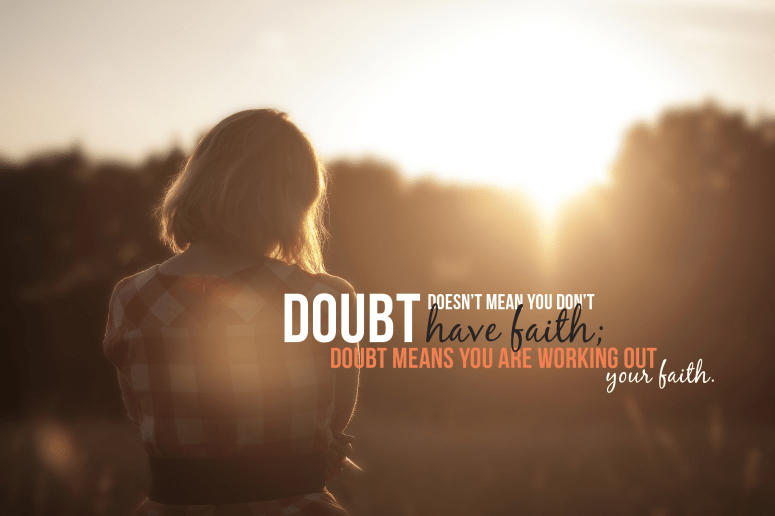
Because, here is the truth – all Christians, at times, face doubt. Doubt is often the crucible through which faith grows. Doubt doesn’t mean you don’t have faith; doubt means you are working out your faith. But, we need to be honest with this so that when we are in those places, we can actually have honest conversations with one another; that we can actually support and love one another; that doubt doesn’t have to have the last word, rather doubt can be the catalyst for conversations that lead to deeper and truer trust.

C.S. Lewis is a name many of you might be familiar with. Someone you might not be as familiar with is George MacDonald whom Lewis said was a tremendous influence and the catalyst for some of his writings. MacDonald writes this,

“Do you love your faith so little that you have never battled a single fear lest your faith should not be true? Where there are no doubts, no questions, no perplexities, there can be no growth.”

And I think that MacDonald is onto something – that when faith stops struggling, it often stops growing.

So, I write all this to remind us of one simple truth – it’s okay to have doubts and struggles; that’s part of the journey of faith. But, what isn’t really okay, healthy or helpful is to just try to deal with those doubts on your own. The Christian faith isn’t individual and isolated; it’s about community and journeying together. So today, if you have struggles, why not share them with a trusted friend? Why not have coffee and work through some of your doubts or difficulties? Because, when we bring them forward, sometimes that’s when we actually find the way forward.

We actually see this frequently in the Bible – people wrestling with their faith. We see this all the time in the Psalms as people cry out to God and wrestle with difficulty. We see this all the time in the lives of the saints who have gone before us.

So, don’t be surprised if you find it in your life too. Just don’t try to go it alone. Because others have been there along the way, others can help you find your way, and it’s in wrestling through things together that we all come to deeper faith, which is the point.

CHANGING THE WORLD, IN A FEW EASY STEPS

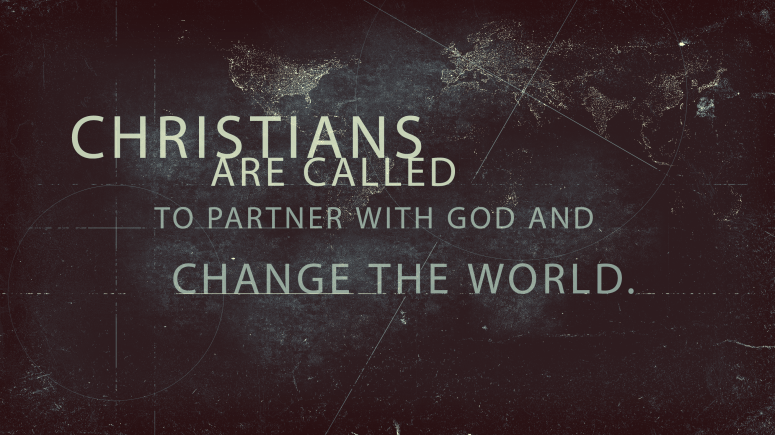
changeworldAs you might have noticed, I actually believe that Christianity is meant to have an impact in the world; that we are actually called, as Christians, to partner with God in changing the world. And that sometimes happens by just changing someone’s world.
But, if you are anything like me, this is often inspiring, but difficult to live out. You might say things like, “I’d love to be part of making the world a better place…but how do I do it? Where do I start? What does it look like for regular people?”

If you have ever read any of the stories of the saints, they might inspire you, but also leave you scratching your head for how to begin.

Well, the other day, I ran across this little acronym from Michael Frost about how to practically follow God in making daily impacts. It’s incredibly simple and straightforward. The hard part isn’t in understanding it, but in actually doing it. And, he gives these weekly small ideas for how to begin to make an impact…

B – Bless others. Do something that makes someone’s life better. Focus on blessing three people a week and at least one who doesn’t go to church

E – Eat with three people this week. That could be people in your workplace, friends or neighbours. And try to eat with at least one person who doesn’t go to church as well.

L – Listen. Simply stop and pray and listen for where the Holy Spirit is guiding you. So often the Holy Spirit is speaking, but we aren’t listening. So, slow down and listen.

L – Learn. Spend time reading the Bible with a focus on getting to know Jesus. If you’re not a regular reader, start with the Gospels. Focus in on getting to know Jesus, so you can live like Jesus.

S – Sent. Live realizing you’re sent and look for God active in the lives around you. And when you see it, take note of it.

And, in all honesty, these are pretty straightforward ways to start to change the world. Bless others, eat with others, listen to God’s Spirit, learn about Jesus and look for Jesus in the world. Sometimes the most counter-cultural and impactful decisions are to the simple, yet hard things.

So, if you’re looking to partner with God in changing lives, maybe it begins by inviting a neighbor over to eat; maybe it means cutting a friend’s grass; maybe it means carving some time out to listen to the Spirit; maybe it means reading the Gospels or just looking for God in your day. I know none of these are huge things, but God is often found in the small, regular, daily things.Remember, God isn’t asking us to do giant things, rather He is asking us to do faithful things. And, maybe that means a meal with friends this week. It’s not a bad place to start!

“We’re Living Here Forever, Right?”

rootsI’ve recently been reflecting on the importance of “roots.” And by roots, I mean people, places and purposes that you are deeply connected to; the relationships, communities and commitments that you are rooted into that provide a rhythm and focus for your life.

I’ve been thinking about this for a number of reasons, mostly because we’ve just been “uprooted” and are trying to put down new “roots” here.

When we first walked into our new house, the first thing our wonderful middle child said was, “Daddy, we are living here forever right?!!” What Asher was trying to figure out, in his 3-year-old way, was whether we were putting down roots here. We had just spent the past six weeks bouncing around from place to place, and he wanted to know if this was the place we would grow roots.

And, roots are incredibly important in life. My friend, Ian Wood, has a saying that we should “be the palm tree.” What he means by this is that we should have roots that keep us grounded, but be flexible so that we don’t break.

And, I think that’s a great picture for all of us to think about. Do you have roots? Do you have people in your life who really, really know you? Do you have a place – a church, a community, a support network – who not only knows you, but loves you? Are you growing too brittle? Are you changing, but still rooted?

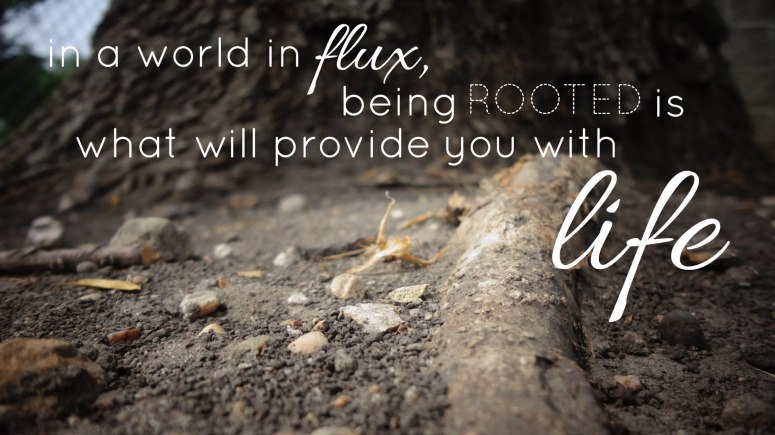
Because in a world in flux, being rooted is what will provide you with life.

The Bible puts it this way in Jeremiah 29:5 – God says, “Build homes, and plan to stay. Plant gardens, and eat the food they produce.”

God essentially says to the Israelites, who are in exile, to plant some roots. Being in exile means they have been displaced, and they are transplanted into a new world. Their lives are in flux. And, the key to surviving and thriving in a world that is in flux, is to plant some roots.

I think that this is incredibly relevant to our world today.

So many of us feel in flux and disconnected. We feel pressured this way and that way. And, what I think God is saying to us is simple – plant some roots; build a home out of your house; plan to stay; grow in the place you are. 

Asher asked me, “Are we living here forever?” and we probably won’t live where we are forever…because, well, that’s kinda long. But, we are putting down deep roots here. We are building our house into a home. We are getting connected to our church and to our community. We are planting gardens and planning to stay. Because roots matter, and give you stability and life when things are in flux.

So, for you today, what might it look like to put down some roots? Do you have good friends who truly know you or do you need to invest there? Are you known in a community and church that can help ground you throughout all the ups and downs? How are you planning on staying and investing in the place you are, rather than just passing through? Because roots not only give you stability and life, they give it to others as well.

So, as Ian says, “Be the palm tree, plant some roots, plan to stay and grow awhile, and see what God might do.”